


It begins with a smell. Not a dramatic one, just a faint, cool mustiness when you open the basement door, the kind you tell yourself is normal for an old house.
Then comes the dark stain along the bottom of the wall, the white powder on the concrete and the damp edge of a stored cardboard box. One heavy rainstorm later, there is a shallow sheet of water spreading across the floor.
Basement water problems rarely arrive all at once. They build quietly, and the signs are easy to explain away until the day they are impossible to ignore.
The good news is that water always follows rules. It enters through specific paths, for specific reasons, and each path has a fix.
What Causes Basement Water Problems and How Do You Fix Them?

Most basement water problems come from poor drainage around the house, clogged gutters, cracks in the foundation, high groundwater, condensation or plumbing leaks. The fix depends on the source: better grading and downspouts for surface water, sealing for cracks, and a sump pump with drain tile for groundwater.
Start with the cheapest steps first. Clean gutters, extend downspouts, correct the slope of soil and run a dehumidifier before paying for major waterproofing.
Key Takeaways
- Most leaks start outside the house, not inside it.
- Gutters, downspouts and soil grading solve a large share of problems cheaply.
- Interior drains and sump pumps handle groundwater that gets past the foundation.
- Condensation can look like a leak, so test before you repair.
- Wet materials should be dried within 24 to 48 hours to limit mold.
- Standard homeowners insurance often excludes groundwater seepage and flooding.
Why Basements Get Wet
A basement sits below ground, surrounded by soil that holds water. Concrete looks solid but is porous, and every joint, crack and penetration is a possible entry point.
Water moves downhill, through soil and toward the lowest spot it can reach. Your basement is usually that spot.
Hydrostatic Pressure
When soil around the foundation becomes saturated, water presses against walls and the floor slab. This is called hydrostatic pressure.
The pressure pushes water through cracks, the joint where the wall meets the floor and tiny pores in the concrete. The more saturated the soil, the stronger the push.
Three Ways Water Gets In
| Entry Method | What Happens | Common Signs |
|---|---|---|
| Surface water | Rain and snowmelt flow toward the foundation | Wet walls after storms, window well flooding |
| Groundwater | A high water table pushes water up and in | Water at the floor edge or through the slab |
| Moisture and humidity | Vapor passes through concrete or condenses | Damp air, musty smell, white mineral deposits |
Why Older Homes Struggle More
Older foundations may use block, stone or early concrete with less protection. Drain tiles can be clogged or missing, and original waterproofing may have failed over time.
That does not mean newer homes are immune. Builders may also skip steps or settle soil poorly around the foundation.
Common Causes of Basement Water Problems
Finding the cause matters more than treating the symptom. These are the most frequent culprits.
Poor Grading and Negative Slope
Soil should slope away from the foundation so water runs away from the house. When the ground slopes toward the home, which is called negative grading, rain collects against the walls.
A common building guideline calls for the ground to fall about six inches over the first ten feet away from the house. Soil settles over time, so even well-built yards can lose that slope.
Clogged or Damaged Gutters
Gutters collect roof water and send it to downspouts. When they are clogged with leaves and debris, water overflows and pours straight beside the foundation.
Broken seams and sagging sections create the same problem.
Short or Disconnected Downspouts
A downspout that dumps water at the base of the house sends hundreds of gallons toward the foundation during a storm. Extensions that carry water several feet away reduce that load dramatically.
Cracks in Foundation Walls or Floor
Concrete cracks as it cures, as soil shifts and as temperatures change. Hairline cracks may be harmless, but wider or growing cracks can let in water.
Failed Cove Joint
The cove joint is where the basement wall meets the floor slab. It is one of the most common leak points because the two surfaces were poured separately.
Window Wells
A window well that fills with water can push it through the window frame or the wall. Missing covers and clogged drains make this worse.
Failed Drain Tile or Footing Drains
Many homes have perforated pipes around the footing that collect groundwater. Over time, they can clog with silt or roots and stop working.
High Water Table
In some areas, groundwater rises close to or above the basement floor during wet seasons. Water can enter through the slab and the joints.
Sump Pump Failure
A pump that fails, loses power or cannot keep up with inflow allows the pit to overflow. Storms often cause power outages at the worst time.
Plumbing Leaks
Supply pipes, drain lines, water heaters, washing machines and sewer lines can all release water indoors. These leaks often get mistaken for foundation seepage.
Sewer Backup
Heavy rain can overload municipal sewers or a blocked house line, pushing wastewater up through floor drains. This is a health hazard and needs prompt professional help.
Condensation and Humidity
Warm, humid air meeting cool concrete creates droplets on walls and pipes. It can look like a leak even though no outside water is entering.
Cause Summary Table
| Cause | Where to Look | Typical Fix |
|---|---|---|
| Poor grading | Soil around the house | Regrade soil |
| Clogged gutters | Roof edge | Clean and repair gutters |
| Short downspouts | Base of house | Add extensions |
| Foundation cracks | Walls and floor | Seal or inject cracks |
| Cove joint seepage | Wall-floor joint | Interior drain system |
| Window well flooding | Basement windows | Covers and drains |
| Clogged drain tile | Footing perimeter | Clean or replace tile |
| High water table | Floor slab | Sump pump with drain system |
| Plumbing leak | Pipes and appliances | Repair plumbing |
| Condensation | Cold walls and pipes | Dehumidifier and insulation |
Signs of Basement Water Problems
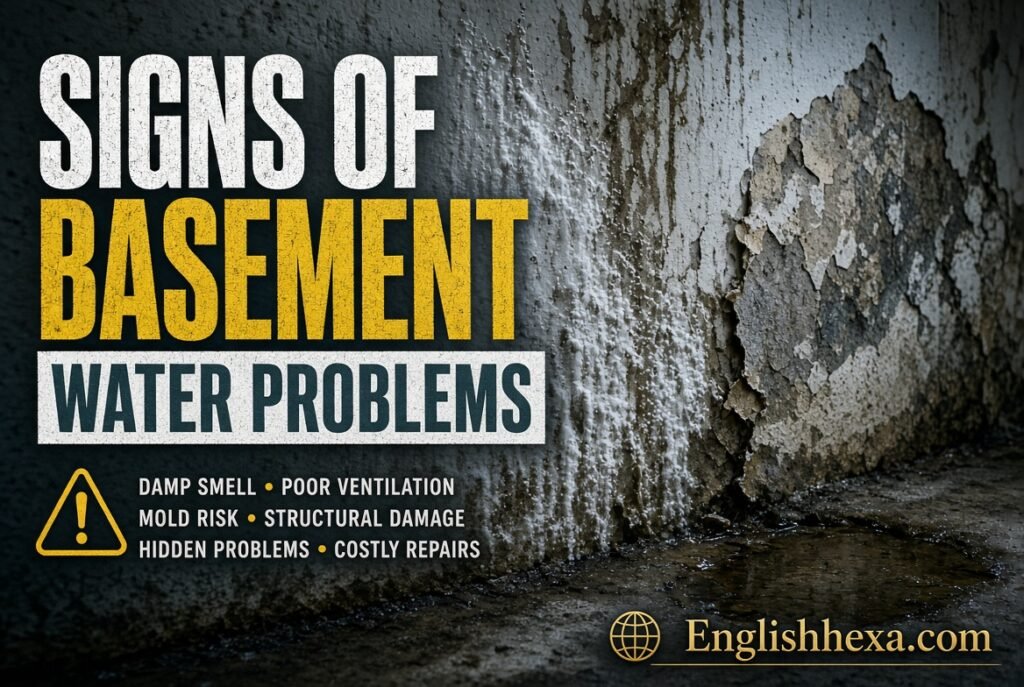
Some signs are obvious, and others hide in plain sight. Catching them early saves money.
Visible Signs
- Standing water or damp patches on the floor
- Water stains on walls or at the base of walls
- Peeling paint or bubbling wallpaper
- White, chalky deposits called efflorescence
- Rust on metal items, such as furnace legs and appliance bases
- Warped wood and rotting door frames
- Mold or mildew growth
Sensory Signs
- Persistent musty or earthy smell
- Cold, clammy feel to the air
- Sound of the sump pump running often
Structural Warning Signs
- Horizontal cracks in block walls
- Stair-step cracks in masonry
- Bowing or leaning walls
- Doors and windows that stick on upper floors
Horizontal cracks and bowing walls can signal serious pressure on the foundation. They deserve a professional evaluation.
Efflorescence Explained
Efflorescence is a white powder left behind when water moves through concrete and evaporates, leaving mineral salts. It does not harm the wall, but it proves water is passing through.
How to Find the Source of Basement Water
Treating the wrong problem wastes money. A few simple tests can reveal where moisture comes from.
The Foil Test for Condensation
Tape a square of aluminum foil tightly to a damp wall and leave it for 24 hours. If moisture appears on the outside of the foil, the problem is condensation from humid air.
If the inside of the foil is wet, moisture is coming through the wall.
Check After Rain
Walk the basement during or right after heavy rain. Note where and how fast water appears.
Water that shows up only after storms usually comes from surface runoff or high groundwater. Leaks that appear in dry weather point to plumbing.
Look Outside the House
Inspect gutters, downspouts, soil slope, window wells and patios. Check whether water pools near the foundation.
Test Plumbing
Turn off water use in the house and check the water meter. If it keeps moving, you may have a plumbing leak.
Use a Moisture Meter
A basic moisture meter shows how wet walls and floors are. Compare readings in different spots to find the worst areas.
Diagnosis Table
| Test | What You Learn |
|---|---|
| Foil test | Condensation or seepage |
| Rain walk-through | Source and timing of leaks |
| Exterior inspection | Grading, gutters and downspout problems |
| Water meter check | Plumbing leak |
| Moisture meter | Wet zones and severity |
| Pump test | Whether the sump pump works |
Basement Water Problems by Severity
Not every case needs a major fix. Match the solution to the severity.
| Severity | What It Looks Like | Likely Approach |
|---|---|---|
| Mild | Damp air, musty smell, minor condensation | Dehumidifier, ventilation, insulation |
| Moderate | Damp walls, occasional seepage after storms | Gutters, grading, sealing cracks, interior drainage |
| Severe | Standing water, repeated flooding, wall movement | Professional waterproofing, sump pump, structural repair |
Fixing Basement Water Problems from the Outside

Exterior fixes stop water before it reaches the foundation. They are often the cheapest and most effective first step.
Clean and Repair Gutters
Clear gutters at least twice a year, and more often if trees overhang the roof. Fix sagging sections and leaking seams so water flows to the downspouts.
Consider gutter guards if leaves are a constant problem.
Extend Downspouts
Direct downspouts several feet away from the foundation, and farther if the ground slopes toward the house. Splash blocks, rigid extensions or buried pipes all work.
A longer discharge point keeps hundreds of gallons from soaking the soil beside your walls.
Regrade the Soil
Add compacted soil to build a slope away from the house. Aim for roughly six inches of drop over the first ten feet when space allows.
Keep soil several inches below siding and avoid piling mulch against the wall.
Fix Window Wells
Install covers to keep rain out, and add gravel at the bottom for drainage. A window well drain connected to the footing drain or another outlet prevents flooding.
Manage Landscaping
Keep plant beds from trapping water against the house. Avoid planting large trees close to the foundation, since roots can disturb drains and footings.
Seal Hardscape Gaps
Seal cracks between patios, walkways and the foundation so water does not run down along the wall. Make sure hard surfaces slope away from the house.
Install an Exterior French Drain
An exterior French drain is a gravel-filled trench with a perforated pipe that collects and redirects water. Fixr estimates a French drain at roughly $25 per foot, or around $900 for a typical small run.
It works well when surface water or shallow groundwater collects near the house.
Exterior Waterproofing
Full exterior waterproofing means excavating around the foundation, cleaning the wall, applying a waterproof membrane and installing drainage. It treats the problem at its source.
It is also the most disruptive and typically the most expensive option, so many homeowners reserve it for severe or recurring cases.
Fixing Basement Water Problems from the Inside
Interior systems manage water that has already reached the foundation. They are less disruptive and can be installed year-round.
Interior Drain Tile (Interior French Drain)
A channel is cut into the floor along the perimeter walls, and a perforated pipe collects water and sends it to a sump pit. Cost guides place professional interior drain systems with sump pumps around $2,000 to $8,000, depending on length and complexity.
This approach captures water from walls, the cove joint and the slab edge before it reaches the floor.
Sump Pump Installation
A sump pump sits in a pit at the lowest point and pushes water out of the house automatically. Costs vary widely among sources, from about $700 to $1,600 for a basic installation to $1,200 to $3,500 when a new pit and discharge line are required.
Pedestal pumps cost less and are easier to service, while submersible pumps are quieter and generally more powerful.
Battery Backup and Water-Powered Backup
Storms cause power outages, and that is when sump pumps work hardest. A battery backup or water-powered backup keeps protection running when the main pump cannot.
Crack Repair
Narrow cracks can often be sealed with epoxy or polyurethane injection. Injection fills the crack and stops water from passing through.
It will not fix a structural problem. Cracks that keep growing or show wall movement need an engineer’s assessment.
Interior Sealers and Waterproof Paint
Concrete sealers, waterproof paint and silicates are cheap and easy to apply. They are generally considered temporary or limited solutions because they hold back moisture from the inside while pressure builds behind the wall.
They may help with minor dampness but rarely stop real seepage.
Vapor Barriers and Wall Systems
Interior wall membranes and dimpled sheets give water a path to the drain system. They work together with drain tile and sump pumps.
Dehumidifiers
A dehumidifier controls moisture in the air, which reduces condensation, mustiness and mold risk. It treats the air, not the source of liquid water.
Drain Cleaning and Floor Drain Backflow Valves
Clogged floor drains can overflow during heavy rain. A backflow valve helps prevent sewage from pushing back into the basement.
Interior vs Exterior Waterproofing
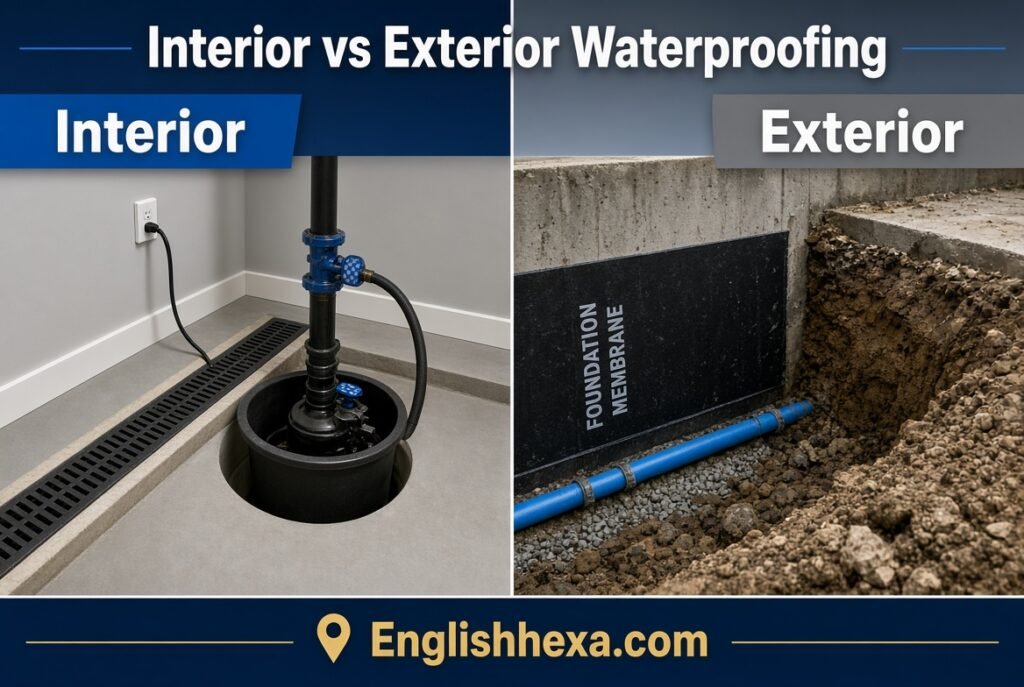
Choosing between interior and exterior approaches depends on severity, budget and access. Many homes use a combination.
| Factor | Interior Waterproofing | Exterior Waterproofing |
|---|---|---|
| How it works | Manages water after it enters | Stops water before it reaches the wall |
| Typical cost | Lower to moderate | Highest |
| Disruption | Less, mostly indoors | Heavy excavation outside |
| Best for | Seepage, cove joint leaks, high water table | Severe wall leaks and repeated flooding |
| Season | Year-round | Easier in dry weather |
| Longevity | Good with maintenance | Very good when done properly |
Which Should You Choose?
Start with the simplest fix that addresses the source. If the cause is surface water, fix gutters, downspouts and grading first.
If water persists, add interior drainage and a sump pump. Reserve exterior excavation for cases where other measures have not worked or the wall itself is failing.
Basement Water Problems and Mold
Moisture and mold go together. Mold needs water, organic material such as paper, wood or drywall and time.
How Fast Can Mold Grow?
Mold can start growing on wet materials within about 24 to 48 hours. That is why quick drying matters after any water event.
Moisture Targets
Environmental guidance generally suggests keeping indoor humidity below about 60 percent, and ideally between 30 and 50 percent. A simple hygrometer shows your basement’s humidity level.
Signs of Mold
- Fuzzy or powdery patches in black, green or white
- Persistent musty smell
- Discolored drywall or ceiling tiles
- Allergy or asthma symptoms that worsen in the basement
Cleaning Small Mold Areas
Small areas on hard surfaces can usually be cleaned with detergent and water, then dried completely. Wear gloves, eye protection and a suitable mask.
Porous materials such as carpet, insulation and wet drywall are often discarded because mold grows deep within them.
When to Call a Professional
Call a remediation professional for large areas, mold after sewage contamination, hidden mold behind walls or if anyone in the home has serious respiratory problems. Fix the moisture source first, or the mold will return.
Basement Water Problems and Your Health
Wet basements can affect indoor air quality for the whole house. Air moves upward, so basement conditions often reach living spaces.
Possible Health Effects
Mold and dampness can trigger allergies, coughing, wheezing and irritation in sensitive people. Children, older adults and people with asthma are more vulnerable.
Sewage Water Safety
Water from a sewer backup is contaminated. Avoid contact, wear protective gear and use professional cleanup for anything beyond a very small area.
Radon Note
Basements are common places for radon to enter a home. Radon is separate from water but is worth testing when you work on foundation issues.
What to Do Right Now When Your Basement Floods
Fast action limits damage and cost. Safety comes first.
- Stay safe. Do not enter standing water if the power is on or if the water could be contaminated.
- Turn off electricity if it is safe to reach the panel. If you cannot do so safely, call your utility or an electrician.
- Find and stop the source. Shut off the main water supply if a pipe is leaking.
- Document the damage. Take photos and video before moving anything, and list damaged items.
- Remove water. Use a pump, wet/dry vacuum or professional extraction depending on the amount.
- Move valuables. Take furniture, electronics and documents to a dry area.
- Dry everything quickly. Run fans and dehumidifiers and open windows when weather allows.
- Discard soaked porous items. Carpet, padding and wet insulation often cannot be saved.
- Call your insurer. Report the loss promptly and ask what is covered.
- Fix the cause. Do not rebuild until you know why the water came in.
Drying Targets
Aim to dry wet materials within 24 to 48 hours. Slower drying raises the chance of mold and deeper damage.
Insurance and Basement Water Problems
Many homeowners learn about coverage gaps after a flood. Check your policy before trouble starts.
What Standard Policies Often Cover
Sudden, accidental water damage from a burst pipe or appliance failure is often covered, subject to terms and deductibles.
What They Often Exclude
Standard homeowners policies commonly exclude flooding and groundwater seepage. Sewer or drain backup is often excluded unless you add a rider.
Optional Coverage
- Water backup endorsement: covers sewer and drain backup and sump pump failure in many policies.
- Flood insurance: available through the National Flood Insurance Program and private insurers. It usually has a waiting period.
Practical Insurance Tips
- Read your policy for water and sewer backup language.
- Ask about sump pump failure coverage.
- Keep receipts and photos of valuable items.
- Report damage quickly and follow your insurer’s instructions.
Basement Water Problems Cost Guide
Costs vary by region, home size and severity. These ranges come from published cost guides and should be treated as starting points for quotes.
| Repair | Typical Cost Range |
|---|---|
| Gutter cleaning | Low, often under a few hundred dollars |
| Downspout extensions | Low, often tens to a few hundred dollars |
| Regrading soil | Varies by yard size |
| Crack injection | Hundreds to low thousands per crack, depending on length and access |
| Sump pump installation (basic) | About $700 to $1,600 |
| Sump pump installation (with new pit and discharge) | About $1,200 to $3,500 |
| Exterior French drain | About $25 per foot, around $900 for a small run |
| Interior drain tile with sump pump | About $2,000 to $8,000 |
| Exterior waterproofing | Highest cost, often several times the interior cost |
| Dehumidifier | A few hundred dollars for a quality unit |
What Affects the Price
- Size of the basement and length of the walls
- Severity and source of the water
- Soil type and access for equipment
- Type of foundation, such as poured concrete, block or stone
- Local labor and permit costs
- Whether drainage lines must run through landscaping
How to Get Fair Quotes
Request at least three written estimates. Ask each contractor to explain the cause of your problem and why their solution addresses it.
Be wary of high-pressure sales, a single-solution pitch for every house and warranties that are vague or limited to the company’s own parts.
DIY Fixes vs Professional Help
Some basement water problems are weekend projects. Others need experienced crews and proper permits.
Good DIY Projects
| Task | Why It Works |
|---|---|
| Cleaning gutters | Stops overflow at the source |
| Adding downspout extensions | Moves water away from the foundation |
| Adding soil to improve slope | Reduces surface pooling |
| Installing window well covers | Keeps rain out |
| Running a dehumidifier | Controls humidity and condensation |
| Sealing small, dry cracks | Stops minor moisture |
| Testing the sump pump | Confirms it works |
| Moving stored items off the floor | Protects belongings |
Jobs for Professionals
| Task | Why |
|---|---|
| Interior drain tile installation | Requires cutting the slab and correct slope |
| Exterior excavation and membrane work | Heavy equipment and structural risk |
| Structural crack repair | Needs engineering judgment |
| Bowing wall stabilization | Safety and structural concern |
| Sewer line repair or backflow valve | Plumbing code and health issues |
| Large mold remediation | Containment and protective equipment |
| Electrical work after flooding | Shock risk |
Know When to Stop
If water returns after simple fixes, walls are moving or cracks are growing, stop and get an assessment. Repeated patching can waste money and hide a bigger problem.
How to Choose a Waterproofing Contractor

Quality varies widely in this industry. A little research protects you from overpriced or ineffective work.
What to Check
- Valid state or local license where required
- Insurance coverage, including liability and workers’ compensation
- Years in business and local references
- Written warranty terms, including transferability
- Detailed written estimate with scope and materials
- Willingness to explain the cause of your problem
Questions to Ask
- What is causing my water problem?
- Why is this solution right for my house?
- What does the warranty cover, and for how long?
- Will you pull permits and handle inspections?
- How will you protect landscaping and finished areas?
- What happens if the system fails during a storm?
Red Flags
- Pressure to sign immediately
- Quotes given without inspecting the property
- One-size-fits-all solutions
- Very low bids that skip drainage or backup power
- Warranties that exclude common failure causes
Sump Pump Basics and Maintenance
A sump pump is the heart of many interior waterproofing systems. It needs regular attention to work during a storm.
How a Sump Pump Works
Water collects in a pit, and a float switch or sensor starts the pump when the level rises. The pump pushes water through a discharge pipe away from the house.
Pedestal vs Submersible
| Type | Pros | Cons |
|---|---|---|
| Pedestal | Cheaper, easier to service | Louder, less powerful, visible |
| Submersible | Quieter, stronger, sits in the pit | Costs more, harder to access |
Quarterly Test
Pour a bucket of water into the pit. The pump should start, remove the water and shut off cleanly.
Maintenance Checklist
- Clean the pit of debris and silt.
- Check the float switch moves freely.
- Confirm the discharge pipe is clear and ends far from the house.
- Test the check valve to prevent backflow.
- Test any battery backup and replace batteries as needed.
- Replace pumps that are many years old before they fail.
Industry guidance often suggests replacing a pump proactively after roughly seven to ten years, since a failure during a storm can cause thousands in damage.
Signs of Trouble
- Pump runs constantly or very often in wet weather.
- Pump makes loud or unusual noises.
- Pump does not turn on when the pit fills.
- Water backs up in the pit or discharge line.
Basement Water Problems in Finished Basements
A finished basement adds value and risk. Water can ruin drywall, flooring and furniture, and it hides moisture behind walls.
Best Materials for Damp-Prone Basements
| Material | Water Tolerance |
|---|---|
| Ceramic or porcelain tile | High |
| Luxury vinyl plank | Good, though trapped water can still cause issues |
| Sealed concrete | High |
| Engineered wood | Low to moderate |
| Carpet | Low, hard to dry |
| Standard drywall | Low |
Smart Finishing Practices
- Fix all water issues before finishing.
- Use moisture-resistant or cement-based wall materials near the floor.
- Leave a small gap at the bottom of drywall for safety.
- Keep furniture slightly off walls for airflow.
- Install a dehumidifier with a drain line.
- Use flood-resistant storage such as plastic bins on shelves.
Check Hidden Areas
Peel back a section of baseboard or carpet if you suspect moisture. Use a moisture meter to scan behind finishes.
Basement Water Problems When Buying or Selling a Home
Water history affects value, insurance and disclosure rules. Both buyers and sellers should approach it carefully.
For Buyers
- Visit after heavy rain when possible.
- Look for stains, efflorescence, new paint on lower walls and musty smells.
- Ask about past water events and repairs.
- Hire an inspector, and consider a foundation specialist if you see cracks or bowing.
- Ask about transferable waterproofing warranties.
For Sellers
- Fix known issues and keep records and receipts.
- Understand local disclosure requirements.
- Provide warranties and maintenance history.
Disclosure rules vary by state, so check local requirements or ask a real estate professional.
Seasonal Prevention Checklist
Regular habits prevent most basement water problems. Add these tasks to your calendar.
Spring
- Clean gutters and check downspouts.
- Inspect the foundation for new cracks.
- Test the sump pump and backup.
- Check soil grading after winter.
Summer
- Monitor humidity and run a dehumidifier as needed.
- Trim plants away from the foundation.
- Check window wells and covers.
- Look for condensation on cold pipes.
Fall
- Clean gutters after leaves drop.
- Disconnect hoses and drain outdoor faucets before freezing weather.
- Check that downspout extensions are in place.
- Seal exterior gaps.
Winter
- Keep snow away from the foundation when possible.
- Watch for ice dams and roof leaks.
- Keep the sump discharge from freezing.
- Check for dampness during thaws.
After Every Major Storm
- Walk the basement and the exterior.
- Check the sump pit and discharge.
- Look for new stains or damp spots.
Common Mistakes with Basement Water Problems
A few errors can turn a small problem into an expensive one. Avoid these common traps.
Painting Over the Problem
Waterproof paint does not stop pressure from behind the wall. It may flake off within months.
Ignoring Gutters and Grading
Many homeowners pay for interior systems while the real cause, such as an overflowing gutter, continues. Check the outside first.
Skipping Backup Power
A pump without backup power can fail when storms hit. Battery or water-powered backups provide peace of mind.
Storing Valuables on the Floor
Use shelves and waterproof bins. Even a small leak can ruin cardboard boxes and papers.
Delaying Drying After a Leak
Mold can start within a day or two. Fast drying makes a huge difference.
Assuming Insurance Covers Everything
Many policies exclude groundwater and sewer backup. Review your policy and add coverage if needed.
Hiring Without Comparing
One quote is not enough. Compare scope, warranty and the contractor’s explanation of the cause.
Basement Water Problems Checklist
Use this list to track your progress.
- Identify where and when water appears.
- Perform the foil test for condensation.
- Inspect gutters, downspouts and soil slope.
- Check window wells and covers.
- Test the sump pump and backup.
- Measure humidity and run a dehumidifier.
- Seal minor cracks if appropriate.
- Get at least three quotes for major work.
- Review your insurance coverage.
- Schedule seasonal maintenance.
Also Read
- Food Manufacturing ERP Software: The Complete Buyer’s Guide for US Producers 2026
- Photography Business Visibility: How to Get Found, Trusted, and Booked in the US 2026
- Product Demo Video: How to Create One That Turns Viewers Into Customers 2026
- Digital Infusing Aggr8Tech Guide and Key Insights
- GFXRobotection AI Software by GFXMaker: A Complete Guide to Features, Uses & How It Works
Frequently Asked Questions (FAQs)
What causes basement water problems?
Common causes include poor grading, clogged gutters, short downspouts, foundation cracks, failed drain tile, high groundwater, sump pump failure, plumbing leaks and condensation.
Why does my basement get wet after rain?
Rain saturates the soil around the foundation, and water can enter through cracks, the cove joint or window wells. Surface runoff from gutters and poor grading is a frequent cause.
How do I know if it is a leak or condensation?
Tape foil to a damp wall for 24 hours. Moisture on the outside of the foil means condensation, while moisture on the inside means water is coming through the wall.
What is efflorescence?
It is a white, chalky mineral deposit left when water passes through concrete and evaporates. It signals moisture movement but is not harmful on its own.
How do I stop water from coming into my basement?
Start outside with clean gutters, long downspouts and sloped soil. If water persists, add interior drainage with a sump pump, and seal cracks as needed.
What is the cheapest way to fix basement water problems?
Cleaning gutters, extending downspouts and regrading soil are the lowest-cost fixes. They solve many surface water issues.
How much does basement waterproofing cost?
Costs vary widely. Interior drain systems with a sump pump are often quoted around $2,000 to $8,000, while exterior waterproofing is generally the most expensive.
How much does a sump pump installation cost?
Published guides range from about $700 to $1,600 for a basic installation and $1,200 to $3,500 when a new pit or discharge line is needed.
Do I need a sump pump?
If your basement has groundwater, a high water table or recurring seepage, a sump pump is a common solution. Homes with only minor surface issues may not need one.
Is waterproof paint effective?
It can help with minor dampness but is usually considered temporary. It does not stop water pressure from behind the wall.
What is a French drain?
A French drain is a perforated pipe in a gravel trench that collects and moves water away. It can be installed outside or inside the foundation.
How often should I test my sump pump?
Test it every few months by pouring a bucket of water into the pit. Also test any battery backup regularly.
How long does a sump pump last?
Many pumps last around seven to ten years, though it varies with use. Replacing an old pump before storm season is a smart precaution.
Can a wet basement cause mold?
Yes. Mold can begin growing on wet materials within 24 to 48 hours, and persistent humidity encourages growth.
What humidity level should a basement have?
Guidance generally suggests keeping indoor humidity below about 60 percent, and ideally between 30 and 50 percent.
Does homeowners insurance cover basement water damage?
It depends on the cause. Sudden pipe bursts are often covered, but flooding and groundwater seepage are commonly excluded, and sewer backup usually needs an added endorsement.
What should I do first when my basement floods?
Stay safe, turn off electricity if you can do so safely, stop the source, document damage and remove water. Dry everything quickly and call your insurer.
How quickly should I dry a flooded basement?
Aim to dry wet materials within 24 to 48 hours to reduce mold growth and damage.
Are foundation cracks always a problem?
No. Hairline cracks are common and often harmless, but wide, growing, horizontal or stair-step cracks deserve professional evaluation.
Can I finish a basement with water problems?
Fix the moisture source first. Then use water-tolerant materials and keep humidity under control.
What flooring is best for a damp basement?
Tile, sealed concrete and luxury vinyl plank handle moisture best. Carpet and standard drywall are the most vulnerable.
Should I buy a house with a wet basement?
It depends on the cause and cost to fix. Get an inspection and a quote from a specialist, and ask about repair history and warranties.
When should I call a professional?
Call one when water returns after simple fixes, walls bow or crack, mold is widespread, sewage is involved or you are unsure of the cause.
Conclusion:
Basement water problems are rarely random. They follow clear paths, from overflowing gutters and sloped soil to cracked walls and rising groundwater, and each path has a practical fix.
Begin with the simple, low-cost steps outside the house, then move to interior drainage and a reliable sump pump if water persists. Control humidity, review your insurance and keep a seasonal maintenance routine.
Act early, because moisture grows more expensive with every storm. A dry basement protects your home’s structure, your belongings and the air your family breathes.

Dilawar Mughal is an SEO expert with 8 years of hands-on experience helping websites grow their organic traffic, rankings, and revenue. He specializes in content-driven SEO, local SEO, and Pinterest SEO, and builds practical, results-focused strategies for businesses and publishers.
