


Open your closet and count the pieces that feel like they were made for you. Not just bought in your size, but truly yours: the jacket that fits across the shoulders, the shirt with your initials stitched inside the cuff, the sneakers nobody else owns.
For most people, that number is small. Most of what hangs in a typical wardrobe was designed for an average body and an average taste, and it shows in the fit, the fabric, and the way the clothes make us feel.
Personalized fashion changes that equation. It lets you add your name, your measurements, your colors, or your story to what you wear.
What Is Personalized Fashion?
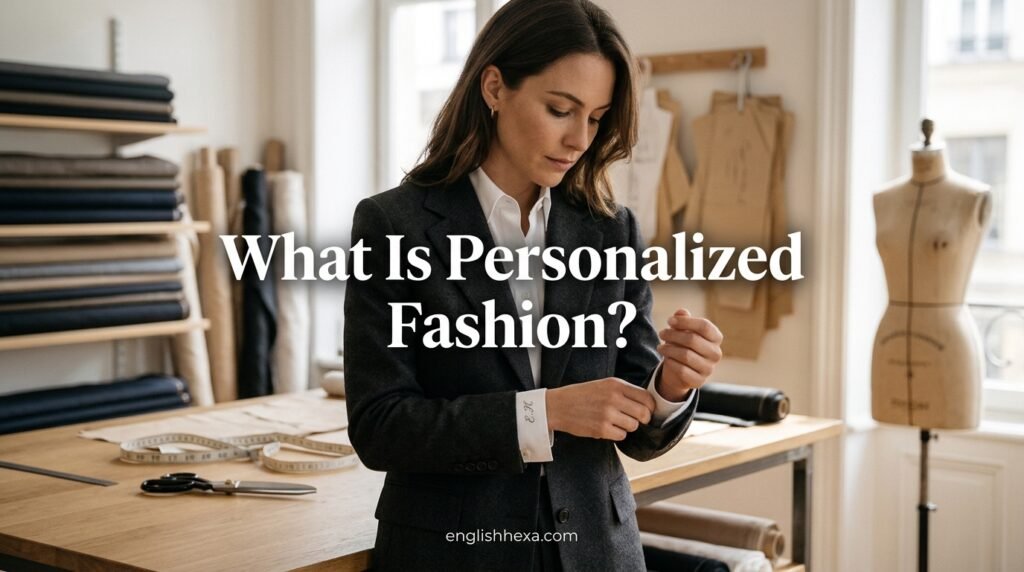
Personalized fashion is clothing, footwear, and accessories that are adapted to an individual’s preferences, body, or identity. The change can be as small as a monogram or as big as a garment made from scratch to your measurements.
The term covers a wide spectrum. It includes custom prints and embroidery, made-to-measure tailoring, engraved jewelry, designer-your-own sneakers, and even algorithms that choose outfits based on your style.
Quick Answer
Personalized fashion means getting clothing or accessories that reflect you, through custom design, custom fit, custom details, or custom styling. It ranges from a monogrammed shirt to a fully bespoke suit.
Why the Idea Feels So Appealing
Standard sizing is built on averages, and very few people are exactly average. Personalization gives you better fit, a stronger sense of identity, and gifts that feel thoughtful rather than generic.
Personalization, Customization, and Bespoke: What Is the Difference?
People use these words loosely, but they describe different levels of change. Knowing them helps you shop with the right expectations.
| Term | What It Means | Example |
|---|---|---|
| Personalization | Adding your name, initials, or a small detail to an existing product | A monogrammed tote bag |
| Customization | Choosing options such as colors, materials, or features from a menu | Selecting colors for a sneaker design |
| Made-to-measure | Using a pattern adjusted to your measurements | A suit tailored from a base pattern |
| Bespoke | A pattern created from scratch for one person | A handmade suit from a tailor on a fitting schedule |
| Made-to-order | Produced only after you place the order, often in standard sizes | A dress sewn after checkout |
| Personal styling | Advice or curation based on your style, not a change to the garment | A stylist selecting outfits for you |
Where Most Shoppers Start
Most people begin with personalization, such as monograms or custom prints, because it is quick and affordable. Made-to-measure and bespoke clothing usually come later, when fit and quality matter more.
Why Personalized Fashion Is Growing
Several forces are pushing personalized fashion into the mainstream. They work together, which is why the trend has staying power.
The Desire for Self-Expression
Many shoppers want clothes that stand out from the crowd. Social media makes unique pieces easy to show off and easy to copy, which fuels the demand for something truly your own.
The Fit Problem
Sizing varies from brand to brand, and returns for poor fit are a major cost in online fashion. Custom and made-to-measure options aim to solve this by starting with your measurements.
Better Technology
Digital design tools, on-demand printing, and smartphone measurement apps make personalization cheaper and faster than it used to be. A designer’s old workflow can now fit inside a browser.
The Gift Economy
Personalized items make memorable gifts for weddings, birthdays, graduations, and holidays. A custom piece shows effort in a way a gift card does not.
Interest in Sustainability
Producing items only after they are ordered can reduce overproduction. Choosing durable, well-fitting clothes that you keep longer can also reduce waste.
A Note on Market Numbers
Many reports claim that custom apparel is a fast-growing segment, but figures vary widely between publishers and often come from vendors with something to sell. Treat any single statistic with caution and look for the original source.
Types of Personalized Fashion

Personalized fashion is a broad category. Here are the main types you are likely to meet.
Custom Printed Clothing
Custom printed clothing includes T-shirts, hoodies, sweatshirts, and jackets with your artwork, text, or photos. Print-on-demand services make it easy to order a single piece.
Embroidered and Monogrammed Apparel
Embroidery adds thread-based lettering or designs. Monograms on shirts, towels, bags, and jackets are classic, understated forms of personalization.
Made-to-Measure and Bespoke Tailoring
Suits, shirts, coats, and dresses can be built around your measurements. Online brands such as Indochino, MTailor, Proper Cloth, and Hockerty built their business on this model, while traditional tailors offer it in person.
Custom Footwear
Some brands let you pick colors and materials for sneakers or boots. Nike By You is a well-known example of a sneaker customization program.
Personalized Jewelry and Accessories
Name necklaces, engraved bracelets, birthstone rings, and initial charms are common. Personalized leather goods, belts, and watch straps also fit here.
Custom Denim and Outerwear
Patches, hand-painted designs, and embroidery on denim and jackets make strong statements. Varsity-style jackets can be customized with names, numbers, and colors.
Personalized Bags and Home Fashion Accessories
Tote bags, backpacks, scarves, and hats are popular canvases because they are simple to customize and easy to gift.
Team and Event Apparel
Groups use custom apparel for family reunions, bachelorette parties, sports teams, and company events. Matching designs create a shared identity.
Kidswear
Personalized children’s clothes include name tees, embroidered bibs, and custom pajamas. Safety rules matter here, which are covered later in this guide.
Popular Personalization Techniques Compared
The method used to add your design affects the look, feel, and durability of the garment. This table compares the most common options.
| Technique | How It Works | Best For | Watch Out For |
|---|---|---|---|
| Embroidery | Thread stitched into fabric | Polos, caps, jackets, monograms | Fine details can be limited |
| Direct-to-garment (DTG) printing | Ink printed directly onto fabric | Full-color designs on cotton | Can fade faster than other methods if poorly cared for |
| Screen printing | Ink pushed through a mesh stencil | Bulk orders and bold designs | Higher setup cost for small runs |
| Heat transfer vinyl | Cut vinyl pressed onto fabric | Names, numbers, simple designs | Can peel if applied or washed poorly |
| Sublimation | Dye bonded into polyester fibers | All-over prints on light polyester | Works mainly on polyester |
| Laser engraving | Laser burns a design into a surface | Leather, wood, metal | Not suitable for most fabrics |
| Patches and appliqué | Pieces sewn or ironed on | Denim, jackets, bags | Placement affects durability |
| Hand painting | Painted by hand | One-of-a-kind art pieces | Needs fabric-safe paint and careful care |
Choosing the Right Method
For a single gift, DTG, vinyl, or embroidery are usually practical. For large group orders, screen printing often becomes cost-effective.
Think About Fabric First
Technique and fabric need to match. Sublimation works on polyester, DTG works best on cotton, and embroidery needs fabric stable enough to hold thread.
Understanding Fabrics for Personalized Clothing
Fabric affects comfort, durability, and how well a design looks. Choose it before you choose the design.
| Fabric | Feel and Traits | Good For |
|---|---|---|
| Cotton | Soft, breathable, takes prints well | T-shirts, hoodies, everyday wear |
| Linen | Light, textured, wrinkles easily | Summer shirts, resort wear |
| Wool | Warm, durable, naturally resilient | Coats, suits, sweaters |
| Denim | Sturdy, ages well | Jackets, jeans, patches |
| Polyester | Durable, quick-drying, wrinkle-resistant | Sportswear, sublimated prints |
| Blends | Balance of comfort and durability | Many everyday garments |
| Leather | Durable, can be engraved or stamped | Belts, wallets, jackets |
Check the Fiber Content
Look for a clear fiber label. In the United States, textile products generally must carry fiber content information, and sellers should state it clearly.
Pay Attention to Weight
Fabric weight affects drape and durability. A thin shirt may feel light but wear out faster than a heavier one.
Made-to-Measure and Bespoke: What to Expect
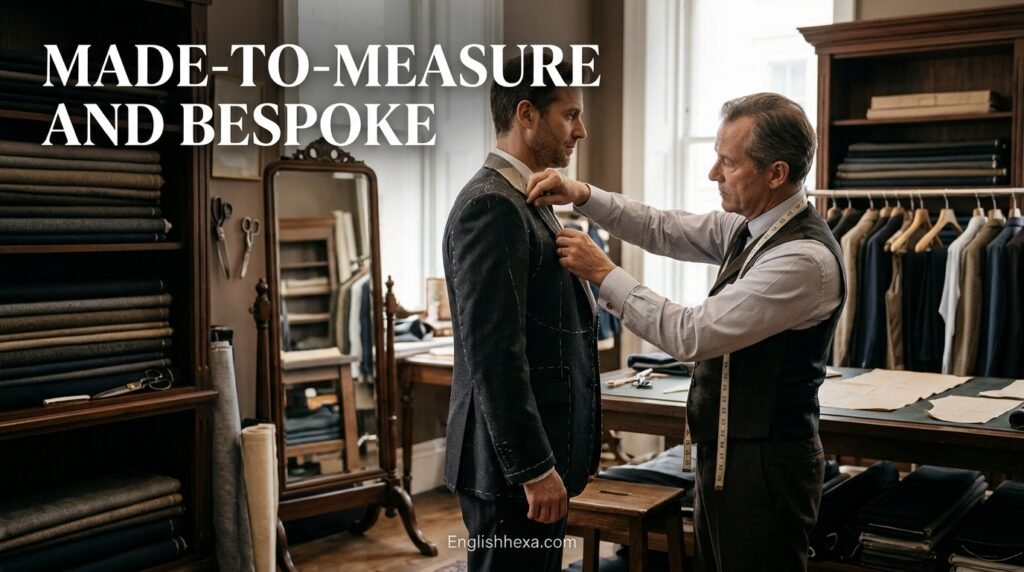
Custom fit is the most powerful form of personalization for many people. It changes how clothes hang, move, and feel.
How Made-to-Measure Works
You provide measurements, and the maker adjusts a base pattern to match them. You also choose fabric, buttons, lining, and details.
How Bespoke Works
A tailor drafts a new pattern for you, often with several fittings. This takes more time and costs more, but it offers the highest level of fit and craftsmanship.
Measuring Yourself
Many online brands guide you through measuring at home. Use a soft tape, wear thin clothing, stand relaxed, and ask someone to help. Double-check each number.
| Measurement | Where to Measure |
|---|---|
| Chest | Around the fullest part of the chest, under the arms |
| Waist | Around the natural waist, above the belly button |
| Hips | Around the fullest part of the hips |
| Shoulder | Across the back from shoulder point to shoulder point |
| Sleeve | From the shoulder point to the wrist |
| Inseam | From the crotch to the ankle bone |
| Neck | Around the base of the neck |
Fit Tips
Share your posture, shoulder slope, and any asymmetry with the tailor. These details often matter more than the raw numbers.
Smartphone and 3D Scanning
Some services use phone cameras or body scanners to capture measurements. They can be convenient, but accuracy varies, so confirm results when possible.
Alterations
Even custom pieces may need minor adjustments. Working with a local tailor can bridge the gap.
How Technology Is Changing Personalized Fashion
Technology is making personalization faster, cheaper, and more accurate. It is also raising new questions.
AI Recommendations
Retailers use algorithms to suggest items based on browsing, purchases, and preferences. These tools can help you find styles that suit you, but they only know what data they have.
Virtual Try-On
Virtual try-on tools use cameras or avatars to show how items might look on you. They are useful for color and style, though fit accuracy is still developing.
AI-Assisted Design
Designers and shoppers use AI tools to generate patterns, mockups, and artwork. If you are exploring these tools, this review of an AI image generator can help you understand what they offer.
Print-on-Demand Platforms
Print-on-demand services print and ship items only after an order is placed. Printful, Printify, and Gelato are examples of platforms that serve this model.
Digital Design Tools
Online designers let you place text, images, and colors on a product preview. Always zoom in and check alignment before ordering.
Privacy and Data Concerns
Personalization often relies on personal data, including measurements and browsing history. Read privacy policies, share only what is needed, and know how to delete your data.
Limits of Technology
Algorithms can miss nuance, and a photo or scan cannot replace a good fitting. Use technology as a helper, not a replacement for your own judgment.
How to Find Your Personal Style

Personalized fashion works best when you know what you want. A little self-knowledge makes every custom choice easier.
Step 1: Audit Your Wardrobe
Pull out everything you own and sort it into pieces you wear often, rarely, and never. Notice patterns in colors, cuts, and fabrics among the favorites.
Step 2: Define Your Lifestyle
Your clothes should match your days. Consider work, travel, weather, activities, and dress codes.
Step 3: Gather Inspiration
Collect images from magazines, social media, and real life. Look for repeating colors, silhouettes, and details.
Step 4: Understand Your Proportions
Notice which cuts and lengths flatter you and feel comfortable. Fit and comfort matter more than trends.
Step 5: Choose a Color Palette
Pick a small set of colors you love and that suit your skin tone and hair. A limited palette makes mixing and matching easier.
Step 6: Build a Capsule
A capsule wardrobe is a small group of versatile pieces that work together. Custom items can fill gaps that off-the-rack clothes cannot.
Common Style Directions
| Style | Typical Look |
|---|---|
| Classic | Tailored, neutral, timeless |
| Minimalist | Clean lines, limited colors |
| Streetwear | Relaxed fits, graphics, sneakers |
| Bohemian | Flowing fabrics, earthy tones, layers |
| Preppy | Polos, blazers, stripes, monograms |
| Athleisure | Comfortable, performance-oriented, casual |
| Vintage | Retro shapes and details |
Personalized Fashion Gift Ideas
Personalized gifts feel thoughtful because they show that you paid attention. They work for many budgets and occasions.
| Occasion | Idea |
|---|---|
| Birthday | Monogrammed shirt, engraved bracelet, custom hoodie |
| Wedding | Embroidered handkerchiefs, personalized robes, custom veils |
| Anniversary | Matching custom tees, engraved cufflinks |
| Graduation | Embroidered stoles, custom jackets, engraved watches |
| New baby | Name blankets, embroidered onesies, personalized booties |
| Holidays | Custom pajamas, scarves with initials |
| Corporate gifts | Embroidered jackets, branded accessories |
| Friends and family | Name necklaces, custom tote bags |
Make It Truly Personal
Use a detail that means something, such as a handwritten note, a coordinate of a special place, or a shared inside joke. Meaning matters more than price.
Order Early
Custom items take longer than standard products, and holidays create rushes. Check production and shipping times before you buy.
Choose Timeless Over Trendy
Names, initials, and simple designs age better than slogans or fads. A subtle piece is more likely to be worn again.
Monograms: A Classic Form of Personalization
A monogram is a design made of one or more initials. It is one of the oldest and most elegant forms of personalization.
Traditional Monogram Order
For an individual’s three-initial monogram, the traditional arrangement places the first initial on the left, the last initial larger in the center, and the middle initial on the right. Many people also use first, middle, and last in order.
Placement Ideas
Common spots include shirt cuffs, collar stays, pocket areas, tote bags, and towels. Subtle placement inside a jacket or cuff feels refined.
Thread and Font Choices
Tone-on-tone thread creates a quiet look, while contrasting colors make a statement. Simple fonts read better on small items.
Avoiding Common Monogram Mistakes
Do not choose a font that is hard to read. Check that the initials are in the right order before ordering.
How to Order Personalized Clothing Step by Step
A careful process helps you avoid disappointment. Follow these steps whenever you order custom clothing.
Step 1: Decide the Purpose
Is it a gift, a team item, or part of your wardrobe? The purpose guides the product, quality, and budget.
Step 2: Choose the Product and Fabric
Pick a base item that suits the technique and your needs. Check fabric content and care instructions.
Step 3: Prepare the Design
Use clear, high-resolution artwork. For print files, 300 DPI at full size is a common standard, and vector files scale cleanly.
Step 4: Review the Proof
Always check the preview or proof. Look closely at spelling, spacing, colors, and placement.
Step 5: Check Sizing and Measurements
Use the size chart and compare it with a garment you already own. For custom fit, confirm your measurements twice.
Step 6: Read the Return Policy
Many sellers treat custom items as final sale because they cannot be resold. Make sure you understand the policy before paying.
Step 7: Confirm Delivery Time
Ask for estimated production and shipping times. Order extra early for events and deadlines.
Step 8: Inspect on Arrival
Check the item as soon as it arrives. Report any errors quickly with photos.
Design Tips for Custom Clothing
Good design matters more than complexity. These tips keep your piece looking polished.
Keep It Simple
Fewer elements usually look better. One strong idea beats five competing ones.
Mind Contrast
Dark designs on light fabric and light designs on dark fabric read best. Low contrast can disappear from a distance.
Choose Readable Fonts
Script fonts look elegant but can be hard to read when small. Test your text at the final size.
Think About Placement
A left chest logo is classic, while a centered back print feels bold. Consider how the design moves with your body.
Respect Copyright and Trademarks
Do not use logos, characters, or artwork that you do not have the right to use. Many platforms reject such designs, and using them can cause legal problems.
How Much Does Personalized Fashion Cost?
Prices vary widely, so it helps to understand what drives them.
| Factor | Why It Matters |
|---|---|
| Fabric and materials | Premium materials cost more |
| Technique | Embroidery and hand work usually cost more than simple prints |
| Quantity | Larger orders often lower the price per item |
| Complexity | More colors, sizes, and details increase cost |
| Labor | Made-to-measure and bespoke work take skilled time |
| Shipping and rush fees | Fast delivery adds cost |
Where to Spend and Where to Save
Spend on fit and fabric for pieces you wear often, such as suits and coats. Save on trend-driven items where a simple print or patch is enough.
Watch for Hidden Costs
Shipping, setup fees, alteration costs, and non-returnable items can add up. Compare total cost, not just the listed price.
Is Personalized Fashion Sustainable?
Personalized fashion can be more sustainable or less, depending on how it is made and used. It is not automatically green.
Possible Benefits
Producing on demand can reduce unsold inventory. A garment that fits well and carries personal meaning is more likely to be kept and worn.
Possible Drawbacks
Individual shipments, packaging, and returns can add environmental cost. Cheap custom items can still be low quality and short-lived.
How to Make Better Choices
- Choose durable fabrics and sturdy construction.
- Buy fewer, better pieces.
- Care for garments properly and repair them when needed.
- Consider customizing secondhand or thrifted clothing.
- Be careful of vague sustainability claims without details.
Upcycling and Customizing What You Own
Adding patches, embroidery, or dye to existing clothes extends their life. It is also one of the most budget-friendly ways to get a unique piece.
Safety Rules for Personalized Children’s Clothing
Children’s items have extra safety considerations. Sellers and buyers should keep these in mind.
Drawstrings
The U.S. Consumer Product Safety Commission treats drawstrings at the neck and hood of children’s upper outerwear as a strangulation hazard. Choose styles without them.
Sleepwear
Children’s sleepwear must meet flammability rules, usually meaning it is either flame resistant or snug-fitting. Check the label and the CPSC guidance before customizing pajamas.
Small Parts and Embellishments
Buttons, beads, and decorations can become choking hazards for young children. Choose secure embroidery over loose attachments.
Caring for Personalized Garments
Custom pieces last longer with proper care. Always check the care label first.
General Care Tips
- Turn printed or embroidered items inside out before washing.
- Use cold or cool water and a gentle cycle.
- Avoid bleach and harsh detergents.
- Air dry or tumble dry on low.
- Iron on the reverse side, and do not iron directly over prints or vinyl.
- Store folded or hung properly to avoid creases over the design.
Caring for Embroidery
Wash gently and avoid high heat. Trim loose threads instead of pulling them.
Caring for Jewelry and Leather
Keep jewelry dry and clean it with a soft cloth. Condition leather occasionally and avoid soaking it in water.
Spotting Scams and Choosing a Trustworthy Seller
Because custom orders are often non-refundable, choosing the right seller is important. A little research prevents costly mistakes.
Warning Signs
- Prices that seem too good to be true
- No clear contact information or physical address
- No return, refund, or privacy policy
- Photos that look copied or inconsistent
- Pressure to pay through unusual methods
- Poor reviews or no reviews on independent sites
How to Check a Store
Search the store name along with the word reviews, check independent review sites, and look at how long the website has been active. For an example of how to evaluate a shop, see this guide on whether Deshoptec.com is legit or a scam.
Pay Safely
Use a credit card or a payment method with buyer protection when possible. Keep screenshots of your order, design, and conversations.
Know Your Rights
If a seller does not deliver what was promised, contact them first and then your payment provider. Consumer protection agencies, including the Federal Trade Commission, publish guidance on online shopping problems.
Starting a Personalized Fashion Business
Many people turn their creativity into income by selling custom apparel and accessories. The model is accessible, but success depends on planning.
Choose a Niche
A clear niche stands out better than a general store. Examples include custom pet owner apparel, wedding party gifts, gym wear, or heritage-inspired embroidery.
Pick a Business Model
| Model | How It Works | Pros | Cons |
|---|---|---|---|
| Print-on-demand | A partner prints and ships each order | Low startup cost, no inventory | Lower margins, less control |
| In-house production | You make or print products yourself | Quality control, higher margins | Equipment and time required |
| Local tailor partnership | A tailor produces made-to-measure items | Premium positioning | Slower and harder to scale |
| Marketplace seller | You sell through platforms such as Etsy | Built-in audience | Competition and platform fees |
Build Trust With Visuals
Great photos and videos help customers imagine your products. For ideas on showing your work, read this guide to creating a product demo video and this one on photography business visibility.
Get Found Online
Search visibility brings steady traffic. If you are comparing marketing help, this overview of an SEO agency in the USA explains what such services typically offer.
Build Smooth Operations
Custom orders require clear processes for design approval, production, and communication. This guide to service business systems shows how to organize operations so the business can run without constant firefighting.
Know the Basics of Compliance
In the United States, textile products generally need fiber content and care labels. Children’s products have additional safety rules, and you cannot use others’ trademarks or copyrighted art without permission.
Protect Customer Data
If you collect measurements or photos, store them securely and be clear about how you use them. Respecting privacy builds long-term trust.
Be Honest About Lead Times
Customers tolerate waiting better than surprises. Set realistic timelines and update them when needed.
Common Mistakes in Personalized Fashion
Even experienced shoppers make avoidable mistakes. Keep these in mind.
Skipping the Proof
Typos are permanent once printed or stitched. Read every character slowly.
Ignoring Fabric Compatibility
A design that looks perfect on cotton may fail on nylon. Match technique to material.
Overcomplicating the Design
Too many colors and elements make a piece look busy and age quickly. Simplicity usually wins.
Guessing Sizes
Custom items are often final sale. Measure carefully and compare with a garment that fits.
Forgetting Deadlines
Rush orders cost more and are riskier. Plan ahead for events and holidays.
Using Protected Artwork
Logos, characters, and celebrity images may be protected. Create your own artwork or license it.
Myths About Personalized Fashion
Misconceptions can stop people from enjoying it. A few of them deserve correction.
Myth: Custom Always Means Expensive
Personalized items range from budget-friendly to luxury. Simple embroidery or printing can be affordable.
Myth: Custom Clothing Always Fits Perfectly
Good fit depends on accurate measurements and communication. Even custom pieces may need small alterations.
Myth: Personalization Is Only for Gifts
Many people use it to build a wardrobe that suits their body and taste. Fit and quality benefit everyday wear.
Myth: AI Knows Your Style Better Than You
AI tools can suggest options, but they do not replace taste or comfort. You remain the final judge.
Personalized Fashion Terms in Plain English
Fashion vocabulary can be confusing. This glossary explains common terms.
| Term | Plain Meaning |
|---|---|
| Bespoke | Made from a pattern created for one person |
| Made-to-measure | Based on an existing pattern adjusted to your measurements |
| Made-to-order | Produced after an order is placed |
| Monogram | Design made of initials |
| DTG | Direct-to-garment printing |
| Vector file | A design file that scales without losing quality |
| DPI | Dots per inch, a measure of print resolution |
| Capsule wardrobe | A small set of versatile clothes that work together |
| Proof | A preview of the finished design before production |
| Print-on-demand | Printing and shipping items only after an order |
Where Personalized Fashion Is Heading
The field keeps changing as technology and tastes evolve. A few directions are worth watching, though predictions are never certain.
Smarter Fit
Better scanning and measurement tools may reduce returns and make made-to-measure clothing more accessible. Accuracy and privacy will remain important topics.
On-Demand and Local Production
More brands are exploring small-batch and local production. This can shorten shipping times and reduce waste when done well.
AI-Assisted Creativity
Designers and shoppers will use AI to explore ideas faster. Questions about originality, copyright, and authenticity will continue.
Customizing Secondhand
Resale and upcycling are merging with personalization. Adding your own touch to a thrifted piece is both creative and sustainable.
Cultural and Heritage Craft
Interest in traditional embroidery, textiles, and artisan techniques is growing. Personalized fashion can connect modern wardrobes with long-standing crafts.
Trusted Sources for Further Reading
Reliable information helps you shop and sell with confidence. These organizations publish clear consumer and industry guidance.
- Federal Trade Commission (FTC), for online shopping, labeling, and consumer protection guidance
- U.S. Consumer Product Safety Commission (CPSC), for children’s clothing safety
- American Apparel and Footwear Association, for industry information
- Local tailors and guilds, for fit and craftsmanship advice
- Independent consumer review sites, for checking sellers
Also Read
- Product Demo Video: How to Create One That Turns Viewers Into Customers 2026
- Photography Business Visibility: How to Get Found, Trusted, and Booked in the US 2026
- Gramhir.Pro AI Image Generator Review 2026: Is It Worth It?
- Deshoptec.com Review 2026: Is Deshoptec.com Legit or a Scam?
- SEO Agency in USA Glorvix: Complete Expert SEO Services Guide for 2026
- Service Business Systems: How to Build the Operations Behind a Business That Runs Without You 2026
- TheLaptopAdviser Buyer Guide for Best Laptop Picks
- Food Manufacturing ERP Software: The Complete Buyer’s Guide for US Producers 2026
- Basement Water Problems: Causes, Fixes, Costs and Prevention for Homeowners 2026
- Road Maintenance Accident Liability: Who Is Responsible When a Poorly Maintained Road Causes a Crash? 2026
- Digital Infusing Aggr8Tech Guide and Key Insights
- GFXRobotection AI Software by GFXMaker: A Complete Guide to Features, Uses & How It Works
- Geekzilla Tio Geek: Tech, Gaming, and Geek Culture Explained
- Brumeblog com Complete Guide and Trusted Insights
- Explore pixelspinx com for Expert Digital Insights
- pressvibepulse com Review: Is It Real or Just Hype?
- Inside the Aelftech com Team 2026: People Behind the Vision
- Jones MyGreenBucks Net Explained: Complete Guide, Features, and Legitimacy
- FintechZoom.io Stock Market Course Review: Is It Worth It?
- Ziimp .com Trading: A Complete, Honest, and In-Depth Guide for Traders
- Test.com Pricing Enterprise Plans: Complete 2026 Review
- MYB Meaning in Text: What It Really Stands For (Complete 2026 Guide)
- FT Meaning in Text: What It Means, How to Use It, and Real Examples 2026
- ICL Meaning Explained: The Ultimate Guide for 2026
Frequently Asked Questions (FAQs)
What is personalized fashion?
Personalized fashion is clothing, footwear, or accessories adapted to an individual through custom design, fit, details, or styling. Examples include monograms, custom prints, and made-to-measure garments.
What is the difference between personalized and customized clothing?
Personalization usually adds your name or a small detail to an existing item. Customization lets you choose features such as colors, fabrics, or design elements from available options.
What is the difference between bespoke and made-to-measure?
Bespoke clothing uses a pattern created from scratch for one person, often with several fittings. Made-to-measure adjusts an existing pattern to your measurements and is usually faster and cheaper.
How do I start with personalized fashion?
Begin with a simple project such as a monogrammed shirt or custom tote bag. Learn what you like, then explore made-to-measure pieces for items where fit matters most.
Is personalized fashion expensive?
It can range from affordable to luxury. Simple embroidery or printing costs less than made-to-measure tailoring, and prices depend on materials, technique, and quantity.
How long does custom clothing take?
Timelines vary by product and seller, from days for simple prints to weeks for made-to-measure items. Always check production and shipping times before ordering.
Can I return personalized clothing?
Many sellers treat custom items as final sale because they cannot be resold. Read the return policy before you buy and check sizes carefully.
What is the best method for custom T-shirts?
Direct-to-garment printing suits full-color designs on cotton, while screen printing is often better for larger runs. Vinyl and embroidery are good for names and simple designs.
What file do I need for custom printing?
A high-resolution image, commonly 300 DPI at the printed size, or a vector file works best. Low-quality images can look blurry.
How do I measure myself for custom clothing?
Use a soft tape measure over thin clothing, stand relaxed, and measure chest, waist, hips, shoulder, sleeve, and inseam. Ask someone to help and double-check each number.
Does AI personalize fashion?
Yes. Retailers use AI for recommendations, virtual try-on, and design tools. These tools can help, but they use data and may not capture your taste or fit perfectly.
Is virtual try-on accurate?
It is useful for style and color, but accuracy for fit varies by tool. Treat it as a guide rather than a guarantee.
What are good personalized fashion gifts?
Monogrammed shirts, engraved jewelry, custom hoodies, embroidered robes, and name necklaces are popular. Choose details that mean something to the recipient.
How do I monogram a shirt?
Choose the placement, such as the cuff or chest, select a thread color and font, and confirm the order of initials. A professional embroiderer can ensure clean stitching.
Is personalized fashion sustainable?
It can be, especially when made on demand and kept for years. However, shipping, returns, and low-quality items can reduce the benefit.
How can I avoid scams when ordering custom clothing?
Check independent reviews, look for clear contact details and policies, and pay with a method that offers buyer protection. Be cautious of prices that seem too good to be true.
Are personalized children’s clothes safe?
They can be if they follow safety rules. Avoid neck and hood drawstrings on children’s upper outerwear, check sleepwear flammability rules, and use secure embellishments.
Can I customize thrifted clothes?
Yes. Patches, embroidery, dye, and alterations can give secondhand pieces a new life and a personal touch.
Can I sell personalized fashion online?
Yes, through print-on-demand services, your own store, or marketplaces. Respect copyright and trademarks, follow labeling rules, and be clear about timelines and policies.
How do I care for personalized clothes?
Wash inside out in cool water, avoid bleach, and air dry or tumble dry on low. Iron on the reverse side and avoid direct heat on prints and embroidery.
Conclusion
Personalized fashion is about more than putting your name on a shirt. It is a way to make clothes that fit your body, match your taste, and carry meaning, whether through a simple monogram, a custom print, or a suit built around your measurements.
The best results come from clarity and care. Know your style, match the technique to the fabric, check every proof, measure carefully, and choose sellers you can trust. Start small if you are new, and invest in custom fit where it matters most.
When done well, personalized fashion turns clothing from something you simply wear into something that feels like it belongs to you. That feeling is worth planning for.

Dilawar Mughal is an SEO expert with 8 years of hands-on experience helping websites grow their organic traffic, rankings, and revenue. He specializes in content-driven SEO, local SEO, and Pinterest SEO, and builds practical, results-focused strategies for businesses and publishers.
