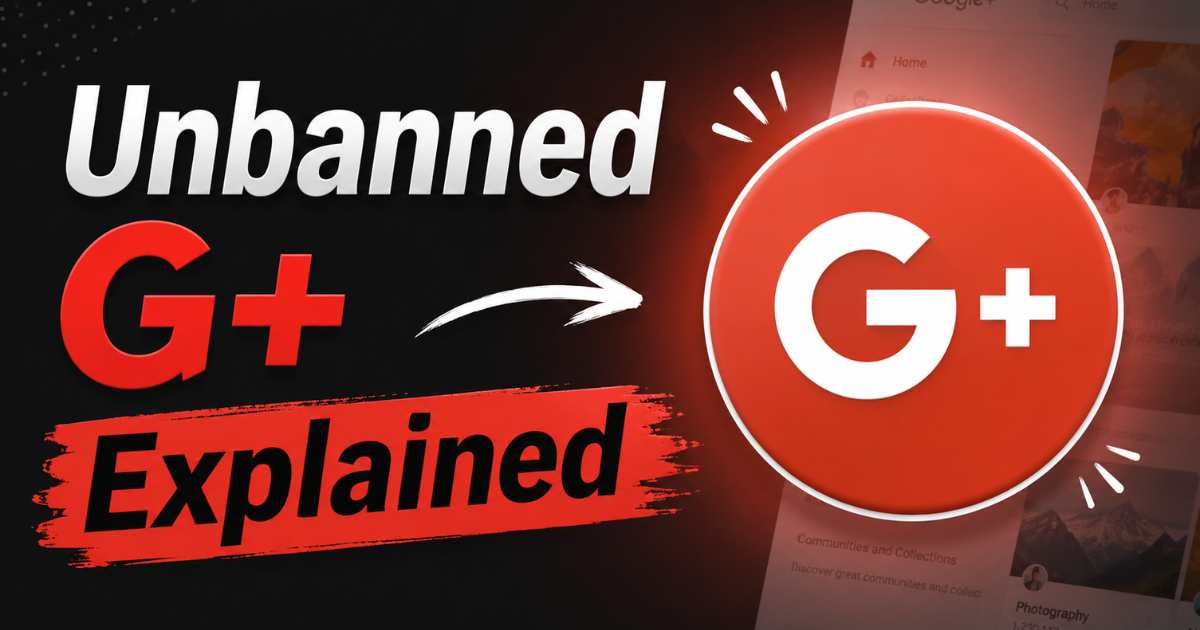

If you’ve spent any time on Chromebooks in a school computer lab lately, you’ve probably heard someone mention “Unbanned G+.” It’s one of the fastest-growing search terms among students and casual gamers in 2026, and yet most people typing it into Google have only a vague idea of what it actually refers to. This guide breaks down what Unbanned G+ really is, why it’s spreading so quickly, and what you should know before you click a link that promises “instant unblocked games.”
Bio Table
| Detail | Information |
| Term | Unbanned G+ (also written Unbanned Gplus, Unblocked Games G+) |
| Category | Browser-based unblocked gaming hub/term |
| Primary Users | Students, Chromebook users, casual browser gamers |
| Technology | HTML5, browser-based emulation |
| Cost | Typically free |
| Official Company | None — it’s a generic, community-driven term, not a single brand |
| Related To Google+ | No official connection |
| Popularity Surge | 2025–2026 |
What “Unbanned G+” Actually Means
Unbanned G+ isn’t a single website, app, or company. It’s a catch-all nickname that’s grown up around a category of browser-based gaming hubs. People use it interchangeably with phrases like “unblocked games g+,” “unblocked games gplus,” and “g+ unblocked games list.”
At its core, the term describes collections of free, browser-playable games that are hosted or mirrored in a way that lets them slip past network restrictions on school or workplace Wi-Fi. Because there’s no single official site, dozens of copycat pages have adopted the same name, which is part of why it can be confusing to pin down exactly which link is “the real one.”
The Origin Story: Where This Trend Actually Came From
The unblocked games niche has existed for well over a decade, dating back to early Flash-game portals that let students dodge school content filters. When Flash was retired, developers shifted to HTML5, and a new generation of unblocked hubs emerged.
“G+” entered the naming convention somewhat organically. Some creators borrowed the “G” branding because it echoes Google-owned products, which tend to be trusted — and therefore less likely to be flagged — on school networks. Over time, “G+” became shorthand across forums and search trends rather than a reference to any single site or company.
Click Here To Read More…
Curious how these hubs actually manage to load where other gaming sites can’t? Keep reading — the next sections cover the mechanics, the safety questions, and what to watch out for.
Related Post: TW Meaning in Text: What It Really Means and When to Use It
Why Unbanned G+ Is Growing So Fast
1. Zero Friction Access That Actually Works
No sign-ups, no downloads, no waiting. Most of these hubs let you land on a page and start playing within seconds, which matters enormously to someone with a five-minute break between classes.
2. It Works Where Everything Else Fails
Many mainstream gaming platforms are blocked by school and office firewalls. Because unblocked hubs are built to look like ordinary web pages rather than gaming platforms, they’re less likely to be caught by broad content-filtering categories.
3. HTML5 Means Any Device, Any Hardware
Old Chromebooks, budget laptops, and shared lab computers can all run HTML5 games smoothly, since the format doesn’t require heavy processing power or plugin installations.
4. A Decentralized Structure That’s Nearly Impossible to Kill
Since there’s no single owner or domain, when one mirror gets blocked, another version reappears under a slightly different name or URL. This whack-a-mole structure is a major reason the trend keeps resurfacing.
5. Viral Sharing With Built-In Social Mechanics
Links get passed around class group chats, Discord servers, and short-form video platforms. A single viral post can send thousands of new visitors to a mirror site overnight.
6. Games Designed for Stolen Moments
The most popular titles on these hubs are short, replayable, and easy to pause — built for five-to-ten-minute windows rather than long gaming sessions.
How These Game Hubs Actually Work
Most unbanned G+ style sites function as aggregators, not original game developers. They pull in open-source or freely licensed HTML5 games and embed them on a single page. A few general patterns show up again and again:
- Simple, ad-supported layouts with grid-style game menus
- Games embedded via iframe rather than hosted natively
- Frequent domain changes to stay ahead of school filtering software
- Minimal or no account systems, which keeps the barrier to entry low
What Games Are Actually on These Platforms
The libraries typically lean toward casual, quick-session titles rather than complex AAA games. Common categories include:
- Arcade classics — Snake variants, endless runners, retro remakes
- Sports and 1v1 games — basketball, soccer, and quick multiplayer duels
- Puzzle and logic games — block-stacking, physics puzzles, escape-room style challenges
- Shooter and battle-royale-style games — simplified, browser-friendly versions
- Driving and racing games — lightweight 3D or 2D racers
Because the game libraries are largely shared across different mirror sites, you’ll often see the same handful of trending titles repeated across multiple “unbanned G+” pages.
Why Students Search for This
The honest driver behind this trend is simple: boredom during downtime and restricted access to entertainment on school-managed devices. Search interest tends to spike during the school year, dips over holidays, and climbs again whenever new filtering software gets rolled out district-wide, since students look for the next workaround.
Is Unbanned G+ Safe? The Honest Answer
This is the most important question, and the honest answer is: it depends heavily on which specific site you land on.
| Safety Factor | What to Know |
| Malware risk | Varies widely — some mirrors carry aggressive ad networks or pop-ups |
| Data privacy | Rarely have clear privacy policies; avoid entering personal info |
| Content moderation | Inconsistent; games and ads aren’t always vetted |
| Network policy risk | Almost always violates school or workplace acceptable-use policies |
Because there’s no central authority verifying these sites, quality and safety differ from one mirror to the next. A page that’s clean today could be riddled with intrusive ads or redirect scripts next week. Treat any unfamiliar unblocked-games link with the same caution you’d apply to any unverified website.
The Google+ Confusion
Despite the “G+” in the name, this trend has no official connection to Google+, the social network Google discontinued in 2019. The naming overlap is coincidental branding, likely chosen because it sounds trustworthy and Google-adjacent. If you’re searching hoping to find anything related to the old Google+ platform, this isn’t it.
Pros and Cons
Pros
- Free to access, with no purchases or subscriptions
- Works on low-spec devices and school-issued Chromebooks
- No downloads or installations required
- Wide variety of quick, casual games
- Easy to access without technical skill
Cons
- No consistent quality control or safety standards
- Frequently ad-heavy, with intrusive pop-ups on some mirrors
- Almost always violates school or employer network policies
- Sites disappear and reappear unpredictably
- No accountability if something goes wrong (data leaks, malicious ads)
Legitimate Alternatives Worth Knowing
If the underlying goal is simply “I want a quick, free browser game,” there are far more stable and reputable options:
- Official publisher game portals run by established gaming companies
- App-store-verified casual game apps with reviews and update histories
- School-approved educational game platforms, which many districts already license
- itch.io and similar platforms that host verified indie HTML5 games
These alternatives offer the same “instant, no-download” experience without the unpredictability of unverified mirror sites.
What the Future of Unbanned G+ Looks Like
As school network security tools grow more sophisticated, expect the cat-and-mouse dynamic to continue. Filtering software will keep closing gaps, new mirrors will keep appearing under fresh names, and the broader “unblocked games” culture will likely keep evolving rather than disappearing. What’s unlikely to change is the underlying demand: as long as students have restricted devices and short breaks, some version of this trend will keep resurfacing under a new name.
Frequently Asked Questions
Is unbanned G+ a real website or just a general term?
It’s a general term, not one official website. Many different mirror sites use similar names.
Does unbanned G+ have any connection to Google+?
No. The naming is coincidental branding and has no official link to Google’s discontinued social network.
Can playing unbanned G+ games get you in trouble at school?
Yes, it typically violates acceptable-use policies and can lead to disciplinary action if discovered.
Do unbanned G+ games require downloads or installations?
No. They’re built with HTML5 and run directly in your browser.
Are unbanned G+ sites safe from malware?
Not guaranteed. Safety varies by mirror, so caution and ad-blockers are recommended.
Conclusion
Unbanned G+ isn’t a mysterious platform with a hidden headquarters — it’s a loosely connected web of browser-game hubs that share a catchy, Google-adjacent name. The trend has grown quickly because it solves a very real problem for students and office workers: quick, free entertainment on devices that otherwise restrict access to it. HTML5 technology, decentralized hosting, and word-of-mouth sharing have combined to keep it alive even as filtering tools evolve.
That said, growing popularity doesn’t automatically mean safety or reliability. Because there’s no single company standing behind these sites, quality, privacy protections, and ad practices vary enormously from one mirror to the next. Before clicking any unfamiliar link, it’s worth weighing the convenience against the real risks — including violating school or workplace policy and exposing your device to low-quality ad networks. If you just want a quick, guilt-free gaming break, a verified app-store game or an official indie game platform will usually serve you better in the long run.

