


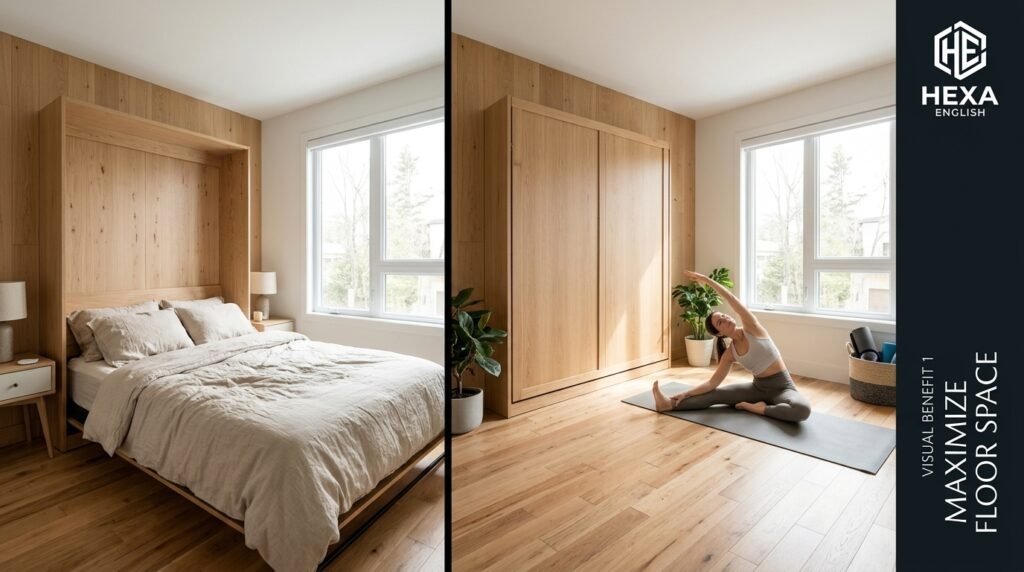
Wall bed benefits start with one simple change: a real bed folds away, and the room gets its floor back. A studio can work, exercise, and host during the day, then sleep comfortably at night. That daily change is the core value, not a hidden trick.
Wall bed benefits also depend on wall type, ceiling height, and use frequency. A strong stud wall and clear open floor make daily use easy and safe. A weak wall, low ceiling, or blocked floor can turn a good idea into daily frustration.
Wall bed benefits grow strongest when one room must do two jobs well. Guest rooms, home offices, studios, and small apartments gain the most from fold away sleeping. Large spare bedrooms used only for sleep gain little from the same investment.
Wall bed benefits should be judged against sofa beds, futons, daybeds, and cabinet beds, not against an ideal bed. Each option trades seating, mattress comfort, floor space, and installation effort differently. The best choice follows the room, not the trend.
Wall bed benefits include comfort, flexibility, and a cleaner daytime look, but they also include cost and effort. Quality hardware, correct anchoring, and a suitable mattress matter more than a low sticker price. Cheap mechanisms often cost more through noise, sagging, and repairs.
What a Wall Bed Actually Is
Wall Bed, Murphy Bed, and Cabinet Bed
A wall bed is a bed frame that pivots up into a wall cabinet when not in use. The mattress stays strapped to the frame on many models, so setup takes seconds rather than full remaking. Closed, the unit can look like cabinetry, shelving, or a plain panel wall.
A Murphy bed is the generic name for a wall mounted fold down bed, named for inventor William Lawrence Murphy. Fine Homebuilding recounts his San Francisco one room apartment story and patents around 1900, with a Disappearing Bed patent in 1912. In 1989, a US appeals court ruled the term generic, so many makers use it freely.
A cabinet bed is different, because it is freestanding furniture that folds out of a chest or console. It needs no wall mounting, so renters and movers often prefer it for flexibility. Its mattress usually folds in three parts, so comfort differs from a standard wall bed mattress.
A wall bed is not a sofa bed, because it does not need to serve as daily seating first. A sofa bed hides a thinner mattress inside a couch, while a wall bed hides a fuller mattress inside a cabinet. That design difference explains most comfort and floor space gaps.
A wall bed is not a futon, because a futon mattress stays visible and folds at the frame for seating. Futons suit casual, low cost seating and occasional sleep, but they rarely match a standard mattress for nightly support. Wall beds suit nightly sleep when the mattress fits maker limits.
How the Mechanism Works
Piston lifts use gas pistons to counterbalance bed weight, making lowering and lifting smoother and more controlled. Many modern makers prefer pistons over older springs for quieter operation and steadier motion. Pistons still need periodic checks for wear, leaks, or weak lift force.
Spring mechanisms use torsion or coil springs to assist lifting, and they have served wall beds for decades. Springs can need adjustment over time, especially with heavy mattresses or daily use. A maker manual should state adjustment limits and service steps clearly.
Counterbalance design matters because an unbalanced bed can drop too fast or feel too heavy to lift. Good hardware matches frame weight, mattress weight, and bedding weight within a tested range. Exceeding mattress limits can strain hardware and change lift behavior.
Support legs flip down when the bed opens, and they carry part of the load to the floor. Legs must sit flat, lock firmly, and clear rugs or thresholds without wobbling. Check leg locks during every setup, especially after moving rugs or furniture.
Safety locks and straps keep the mattress in place and help hold the closed unit shut. Mattress straps prevent sliding during folding, while cabinet latches prevent accidental opening. Never bypass a lock to fit a thicker mattress or heavier bedding.
Floor Space Math That Matters
A Queen Bed Takes Real Room
A queen bed measures 60 inches wide by 80 inches long, covering about 33 square feet before side clearance. MattressNut uses that figure to show why small rooms feel crowded with a permanent bed. Side tables, walkways, and door swings add even more blocked space.
A vertical queen wall bed folds into a cabinet about 65 inches wide and 16 inches deep, according to MattressNut space math. That closed footprint is roughly 7 square feet, freeing about 29 square feet compared with an open queen bed. Actual savings vary by cabinet width, side panels, and trim.
A traditional bed can occupy 30 to 50 square feet permanently, according to SilentMarble small space content. That range includes larger sizes and surrounding clearance, not only mattress area. Wall beds recover most of that area, but not every inch around the cabinet.
Floor recovery is not wall recovery, because the cabinet still uses wall space and depth when closed. Side cabinets, shelves, and desks increase closed footprint while adding storage or work function. Measure closed depth with doors, handles, and trim included.
Open floor changes behavior, because people use space they can see and walk through easily. A cleared room invites exercise, play, work, and hosting in ways a bed dominated room discourages. That psychological gain matters, even though it cannot be measured like square feet.
Worked Examples by Room
A 150 square foot studio gains about 20 percent usable area when a vertical queen folds away, using MattressNut math. That gain can hold a desk, dining table, or exercise mat without crowding walkways. Layout still needs open depth for the bed at night.
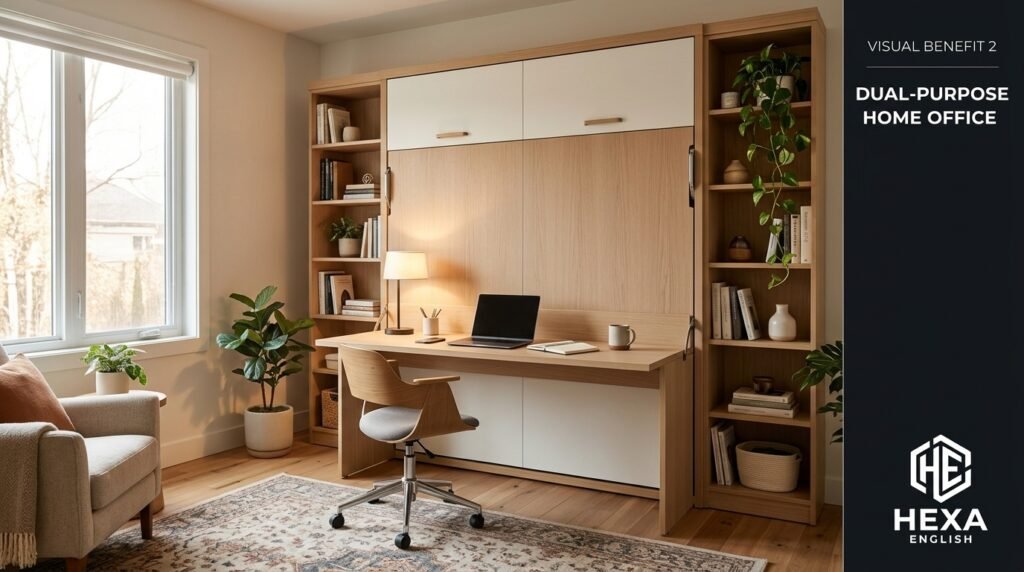
A 120 square foot spare room can work as an office by day and guest room by night with a twin or full wall bed. A desk front or side shelves keeps work tools visible without a separate office. Guests gain a real mattress instead of an air mattress on the floor.
A 200 square foot guest room may not need a wall bed if guests visit often and no second use exists. A permanent bed can be simpler, cheaper, and easier for older guests to use. Wall beds earn their cost when the room has a strong daytime job.
A basement room can gain a guest bed without losing a playroom or gym, but ceiling height and wall type must be checked first. Horizontal beds suit lower ceilings better than vertical beds in many cases. Moisture, egress, and code rules still apply to sleeping rooms.
| Room example | Bed choice | Day use gained | Key check |
| 150 sq ft studio | Vertical queen | Desk, dining, exercise area | Open depth and side clearance |
| 120 sq ft office | Twin or full vertical | Desk and storage wall | Ceiling height and wall studs |
| Low ceiling room | Horizontal queen or twin | Living or play area | Cabinet height and open width |
| Renter room | Cabinet bed | Console or chest by day | No wall drilling needed |
| Guest room, rare use | Wall bed with shelves | Office or hobby room | Cost versus visit frequency |
A Real Mattress Advantage
Sleep Comfort Without Sofa Bars
A wall bed can use a standard mattress within maker thickness and weight limits, unlike many sofa beds. No bars, thin pads, or seat cushion gaps sit under the sleeper at night. That support difference matters most for nightly use and longer stays.
Mattress thickness limits vary by model, so one universal thickness rule would mislead buyers. True Contemporary listings allow 8 inches for twin and full models, and 10 inches for queen models in the examples reviewed. Other makers allow 10 to 12 inches, so always check the exact model manual.
Mattress weight limits also vary, because hardware, frame, and bedding add load during lifting. A heavy hybrid or latex mattress can exceed a limit even when thickness fits inside the cabinet. Check combined mattress plus bedding weight before purchase, not thickness alone.
No box spring is needed on many wall beds, because slats or a platform support the mattress directly. That design saves height inside the cabinet and simplifies setup. Slat spacing still affects support, so check slat count and spacing in specs.
Bedding can stay in place on many wall beds, which saves daily setup time compared with sofa beds. Pillows may need removal on some models, depending on cabinet depth and mattress thickness. Test bedding thickness before assuming everything folds away neatly.
Mattress Choice Rules
Firmness choice should follow sleeper weight, sleep position, and nightly versus occasional use. Side sleepers often need more pressure relief, while stomach sleepers often need firmer support. A guest mattress should suit average guests, not only the owner.
Foam mattresses suit many wall beds because they fold, compress, and return shape within cabinet limits. Memory foam can sleep warm, so breathable covers and room airflow help comfort. Hybrid mattresses add support but also add weight and thickness.
Innerspring mattresses can work when thickness and weight fit, but tall pillow tops often exceed cabinet depth. Measure compressed thickness, not showroom loft, before ordering. A mattress that barely closes can strain latches and hardware over time.
Mattress ventilation matters when a mattress folds into an enclosed cabinet for hours each day. Trapped moisture can affect odor and mattress life, especially in humid rooms. Leave cabinet doors open briefly after use when maker guidance allows airflow.
One Room, Two Jobs

Office by Day, Bedroom by Night
A home office gains a guest bed without losing desk space when a wall bed uses the opposite wall. Desk front models let a work surface stay level while the bed folds down below or beside it. Check desk clearance, chair space, and cable routing before choosing that style.
A desk front wall bed should never trap laptops, monitors, or loose items when the bed opens. Some desk designs pivot or slide to stay usable, while others require clearing the surface first. Read the exact model operation steps, because desk behavior varies widely.
A guest office also needs lighting for both jobs, with task light for work and soft light for sleep. Cabinet lighting can help reading, but glare on screens can hurt daytime work. Plan outlets for chargers, monitors, and lamps on both sides.
Work boundaries improve when a closed wall bed hides sleep cues during work hours. A visible bed can tempt naps and blur work rest separation in a small home. A closed cabinet helps the room feel like an office, not a bedroom with a desk.
Living Room, Gym, and Playroom
A living room can host guests without a permanent bed blocking seating, television viewing, or traffic paths. A wall bed with a sofa front adds daytime seating, but seating comfort still depends on sofa design. Do not assume every sofa front feels like a full living room couch.
A home gym gains floor for mats, weights, and movement when the bed folds away each morning. Equipment must move clear of open depth at night, so storage planning matters. Heavy equipment near the cabinet can block safe opening if left in the path.
A playroom gains open floor for toys and movement, while parents gain a guest bed for overnight visitors. Safety locks, soft corners, and clear operation rules matter more in rooms children use daily. Children should never operate a wall bed without adult supervision and maker guidance.
A craft or hobby room can keep tables and storage in use during the day, then host guests at night. Small items near the cabinet can fall behind the bed if left in the swing path. Clear a marked open zone on the floor for safe operation.
Guest Hosting Without a Spare Room
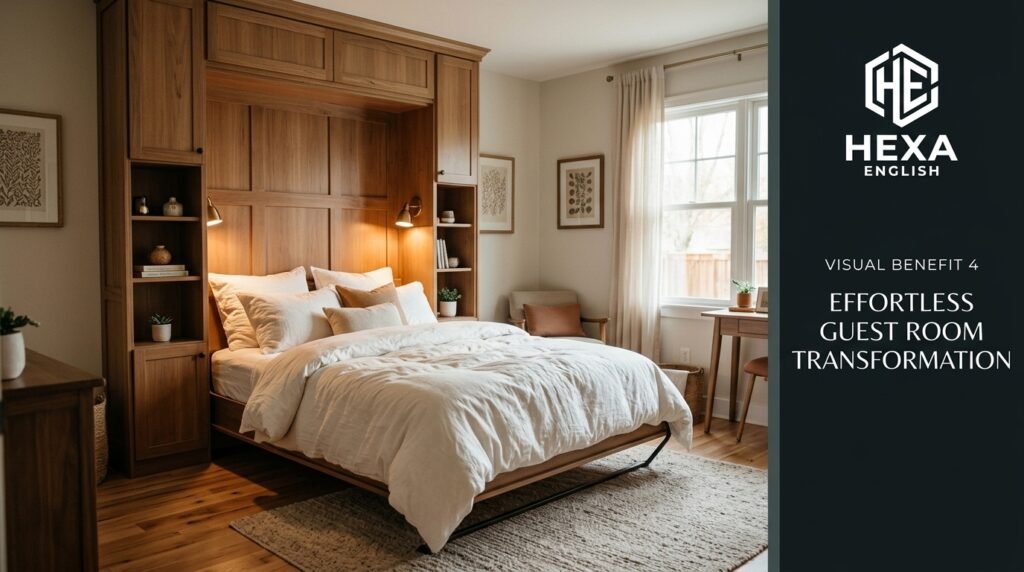
Guest hosting improves when visitors get a real mattress, real bedding, and privacy, rather than a couch compromise. Guests sleep better, stay longer comfortably, and need less host help at night. That comfort gain is a major wall bed benefit for frequent hosts.
Guest hosting also improves when hosts avoid inflating, deflating, and storing an air mattress for each visit. Setup takes seconds on many wall beds, with bedding already in place. Hosts should still provide towels, water, outlets, and clear house instructions.
Guest hosting for older visitors needs extra thought about lift effort, bed height, and getting in and out. A low horizontal bed or a permanent guest bed may suit older guests better than a tall vertical unit. Ask guests about mobility needs before finalizing a design.
Style, Storage, and Custom Looks
Closed Cabinet Style
Closed cabinet style ranges from plain panels to shaker fronts, wood tones, white lacquer, and built in shelving. Modern units can blend with wardrobes, bookcases, or media walls when finishes match nearby furniture. Mismatched finishes can make a large cabinet dominate a small room.
Side cabinets add storage for bedding, books, clothes, or office supplies without a separate dresser. Wardrobe towers can frame the bed and make the wall feel intentional rather than improvised. Side units also increase cost, width, and installation complexity.
Shelving above or beside a wall bed can hold decor, plants, or books, but items must stay clear of the swing path. Open shelves near moving hardware need secure placement and weight limits. Closed cabinets protect items from dust and accidental knocks during operation.
Lighting options include cabinet lights, reading lights, and USB outlets on some models, which help nighttime use. Electrical work needs safe routing and maker approved parts, especially near moving frames. Never run loose cords across the bed opening path.
Desk, Sofa, and Storage Fronts
Desk front models combine work and sleep in one wall, which suits small offices and studios best. Desk depth, chair clearance, and monitor placement must be tested in the open and closed positions. A desk that blocks bed opening defeats the purpose entirely.
Sofa front models add daytime seating, but sofa depth and cushion comfort vary by maker and price. Some sofa fronts fold away fully, while others stay in front and reduce open clearance. Measure seating depth plus bed open depth together before purchase.
Storage front models use drawers or cabinets in the closed face for bedding, linens, or seasonal items. Storage helps small homes, but heavy drawers can affect balance and cabinet anchoring. Keep heavy items low and within maker weight guidance.
Custom built in models can match trim, paint, and cabinetry exactly, giving the most seamless room look. Custom work costs more, takes longer, and depends on local cabinet maker availability, according to Lori Beds buying content. Finished cabinet models offer a middle path between kits and full custom work.
Types, Mechanisms, and Operation
Vertical Wall Beds
Vertical wall beds fold up with the head at the wall and the foot rising toward the ceiling. They save the most floor width in narrow rooms, because cabinet width matches bed width. They need the most ceiling height, so low rooms may not suit them.
Vertical queen cabinets in True Contemporary examples measure about 65.4 inches wide, 15.75 inches deep, and 84.25 inches high when closed. Open depth reaches about 86.24 inches, so front clearance must exceed bed length plus walking room. Ceiling height must clear cabinet height plus trim and operation space.
Vertical twin cabinets suit narrow guest rooms, kids rooms, and offices where a single sleeper is expected. Closed width is smaller, but open depth still reaches bed length, so floor planning remains important. Twin units cost less in many lines, but mattress comfort still depends on model limits.
Vertical beds suit nightly use when hardware, mattress, and wall support are correctly matched. Daily lifting should feel controlled, not heavy or jerky, after proper installation and adjustment. If lifting feels unsafe, stop use and contact the maker or installer.
Horizontal Wall Beds
Horizontal wall beds fold sideways, with the long side against the wall and the bed extending less far into the room. They suit low ceilings, wide walls, and rooms where vertical height is limited. They need more wall width, so narrow walls may not fit them.
Horizontal queen cabinets in True Contemporary examples measure about 85.47 inches wide, 15.75 inches deep, and 64.76 inches high when closed. Open depth reaches about 69.61 inches, which is less than a vertical queen open depth. Side clearance still matters for getting in and out comfortably.
Horizontal twin cabinets suit kids rooms, basements, and wide short walls where vertical cabinets would look oversized. Closed height can double as a shelf or display surface in some designs, but weight on top must follow maker guidance. Never place heavy items where they can fall during opening.
Horizontal beds suit couples less well when only twin or full sizes fit the wall, so size choice must match sleeper needs. A horizontal queen still sleeps two, but wall width and room layout decide feasibility. Measure wall width with trim, outlets, and vents included.
Cabinet Beds and Motorized Beds
Cabinet beds fold a tri-fold mattress inside a freestanding chest, with no wall anchoring required. Archic Furniture notes many cabinet mattresses measure about 6 inches thick, thinner than many wall bed mattresses. Cabinet beds suit renters, movers, and low ceiling rooms best.
Cabinet beds keep floor footprint when closed, unlike wall beds that use mainly wall depth. A queen cabinet can measure about 64 inches wide by 26 inches deep, covering roughly 11.75 square feet in one Night and Day example. That footprint still beats a permanent queen bed, but it is not zero.
Motorized wall beds use a motor to lift and lower the frame, which helps users with limited strength or mobility. Lori Beds content lists motorized models around 3,000 to 8,000 dollars, versus manual models around 1,000 to 3,500 dollars. Power failure plans matter, because a motorized bed may need backup power or manual override.
Manual wall beds need no electricity, cost less, and avoid motor maintenance, but they require physical effort each use. Piston assist reduces effort greatly compared with old spring only designs, according to multiple maker guides. Test lift effort in a showroom when possible, with the intended mattress installed.
| Type | Mounting | Mattress style | Best room | Main limit |
| Vertical wall bed | Wall studs | Standard, maker limit | Narrow room, tall ceiling | Ceiling height |
| Horizontal wall bed | Wall studs | Standard, maker limit | Wide wall, low ceiling | Wall width |
| Cabinet bed | None, freestanding | Tri-fold foam, often 6 in | Renter, mover, low ceiling | Closed floor footprint |
| Motorized wall bed | Wall studs, power | Standard, maker limit | Limited strength users | Cost and power failure |
| Desk front wall bed | Wall studs | Standard, maker limit | Home office guest room | Desk clearance rules |
| Sofa front wall bed | Wall studs | Standard, maker limit | Living guest room | Sofa comfort varies |
Sizes, Clearance, and the Wall Test
Standard Sizes
Twin wall beds sleep one adult or child on a 38 by 75 inch surface, with cabinet width near 44.53 inches in True Contemporary vertical examples. Twin units suit offices, kids rooms, and narrow guest spaces best. Couples should not expect twin comfort for two adults.
Full wall beds sleep one adult comfortably or two adults in tighter space, on a 54 by 75 inch surface. Cabinet width near 59.49 inches in True Contemporary vertical examples leaves more side room than twin. Full units suit single sleepers who want extra width.
Queen wall beds sleep two adults on a 60 by 80 inch surface, the most common choice for guest rooms and studios. Cabinet width near 65.4 inches vertical and 85.47 inches horizontal in True Contemporary examples shows orientation impact clearly. Queen units need the most open depth and side clearance.
King wall beds exist in some custom and premium lines, but they need very wide walls and strong anchoring. King open depth and weight increase hardware and installation demands sharply. Most small rooms should choose queen or smaller for usable clearance.
Clearance Rules
Open depth must include bed length plus space to walk around the foot and sides safely. A vertical queen open depth near 86 inches means the room needs more than 86 inches of clear floor in front. Rugs, coffee tables, and chairs must move out of that zone at night.
Side clearance helps sleepers get in and out without climbing over a partner or hitting a wall. Aim for usable side space on at least one side, with more space preferred for couples and older guests. Maker manuals vary, so use the largest clearance among maker guidance and room comfort needs.
Door swing clearance matters because bedroom doors, closet doors, and cabinet doors can collide with an open bed. Map every door swing on paper before ordering, including closet and bathroom doors near the bed wall. A bed that blocks a door can create safety and daily use problems.
Ceiling clearance matters for vertical beds, cabinet height, trim, lighting, and safe lifting motion. Low hanging lights, fans, and beams can interfere with cabinet height or operation. Horizontal beds reduce ceiling needs but increase wall width needs instead.
The Wall Test
Find studs first with a stud finder, then confirm spacing, which is typically 16 inches in many US wood framed walls. True Contemporary listings require attachment into at least two wood studs for the models reviewed. Drywall alone cannot safely hold a loaded wall bed.
Check wall material before ordering, because brick, masonry, metal studs, and plaster each need different fasteners and expertise. True Contemporary listings warn against brick, masonry, or metal stud walls without proper fasteners and a qualified professional. When wall type is uncertain, hire a professional assessment first.
Check for hidden obstacles including outlets, switches, vents, pipes, baseboard heaters, and low windows on the bed wall. Outlets behind a cabinet can become unusable, while vents can be blocked and create heating problems. Move or plan around obstacles before installation, not after delivery.
Check floor level because support legs need a flat, stable surface to lock safely. Uneven floors, thick rugs, and thresholds can tilt the frame or prevent leg locks. Test leg operation on the actual floor surface, including rug thickness if rugs will stay.
Check baseboards and trim because cabinets may need trim removal, shimming, or custom filler panels for a flush fit. Baseboard depth can push a cabinet forward and change closed depth. Ask the installer about trim work in the quote, not as a surprise later.
| Check | Pass signal | Stop signal |
| Studs | At least two wood studs in cabinet width | No studs, metal studs, or unknown wall |
| Ceiling | Cabinet height plus trim clears ceiling | Beam, fan, or light in cabinet zone |
| Open floor | Bed length plus walk space clear | Door swing or furniture blocks path |
| Wall obstacles | Outlets and vents stay usable | Vent blocked or outlet trapped |
| Floor | Legs sit flat and lock | Rocking, gaps, or rug interference |
Costs Without Confusion
Product Cost by Scope
Budget kits without cabinetry start around 500 to 800 dollars in MattressNut price content, but mattress, delivery, and installation often cost extra. Kits suit skilled DIY buyers who accept assembly time and finish limits. Low kit price does not equal low total cost.
Mid range finished models with shelving and panels run 1,500 to 3,500 dollars in MattressNut content, while HealthyAttitude lists quality models at 1,500 to 5,000 dollars or more. Finished models suit buyers who want a clean look without custom cabinet work. Mattress and installation still add to the total.
Premium models with side cabinets, desks, or sofa fronts cost 4,000 to 7,000 dollars or more in MattressNut content. Premium pricing often reflects materials, hardware, finishes, and integrated furniture, not only bed size. Compare included features, not headline price alone.
Custom built in units can exceed 10,000 dollars in MattressNut content, while Lori Beds buying content lists custom work at 5,000 to 15,000 dollars or more. Custom scope, finishes, local labor, and lead time explain the wide range. Custom quotes should itemize cabinetry, hardware, install, and finish work separately.
Cabinet beds often cost less than wall mounted systems, but prices vary by size, mattress, and finish. Cabinet beds avoid wall installation cost, which can offset a higher furniture price. Compare total cost, including delivery and assembly, across both types.
Installation Cost by Path
Professional installation ranges from 1,000 to 7,500 dollars in Angi content, with an average around 3,000 dollars for professional Murphy bed installation. That range likely mixes product and install scopes across projects, so itemized quotes matter more than averages. Ask whether the quote includes hardware, trim, haul away, and testing.
DIY installation can save labor cost, but it needs two adults, tools, stud knowledge, and careful manual reading. Lori Beds content notes some flat pack models need hours of assembly with basic tools and two people. Mistakes in anchoring create safety risk, so DIY suits only confident, careful installers.
White glove delivery can add cost but reduces heavy lifting, damage risk, and assembly time for large cabinets. Ask what white glove includes, such as room placement, assembly, packaging removal, and operation testing. Some cabinet beds exclude white glove assembly by model, so confirm before ordering.
Trim and repair costs can appear after installation, including baseboard work, paint touch ups, and outlet moves. Custom built ins often include finish work, while kits may leave gaps or exposed fasteners. Budget a small finish allowance unless the quote states finish work clearly.
| Scope | Competitor reported product range | Extra costs to add |
| Budget kit | 500 to 800 dollars, MattressNut | Mattress, delivery, DIY time, install help |
| Mid range finished | 1,500 to 3,500 dollars, MattressNut | Mattress, delivery, pro install |
| Quality models | 1,500 to 5,000 dollars or more, HealthyAttitude | Mattress, delivery, install, trim |
| Premium integrated | 4,000 to 7,000 dollars or more, MattressNut | Mattress, delivery, install, finish |
| Custom built in | 5,000 to 15,000 dollars or more, Lori; over 10,000 dollars, MattressNut | Design, lead time, local labor, finish |
| Motorized | 3,000 to 8,000 dollars, Lori | Power work, backup plan, service |
| Professional install only | 1,000 to 7,500 dollars, average about 3,000 dollars, Angi | Scope must be itemized |
All cost figures above are competitor reported ranges, not quotes, and they mix scopes, regions, and dates. Re-check maker and installer quotes at purchase time, with mattress and delivery included.
Safety, Installation, and Maintenance
Anchoring Is Not Optional
Wall anchoring keeps a heavy frame, mattress, and sleepers stable during opening, closing, and sleep. A wall bed that is not secured can tip, shift, or fall onto the person operating it, according to Archic Furniture safety content. Never use a wall mounted bed unanchored, even temporarily for testing.
Stud anchoring should follow the exact maker manual for fastener type, stud count, and floor anchoring if required. Bestar guidance quoted by Archic Furniture states installation must be by a professional or qualified person to wall and floor structure. When manual and general advice conflict, the manual for that model controls.
Professional installers can assess studs, wall material, floor level, and load paths better than a generic online guide. Angi content stresses hiring a local professional to keep the unit structurally sound and properly anchored. Get installer experience with wall beds specifically, not only general furniture assembly.
Children and pets should stay clear during installation and operation, because moving frames and pinch points create injury risk. AnyFlip assembly content lists keeping children and pets away during assembly and testing the bed multiple times before regular use. Teach household members the lock, strap, and leg steps before first overnight use.
Daily Operation Safety
Open slowly and fully until legs lock and the frame sits stable, without forcing a stuck mechanism. Forcing a jammed piston, spring, or leg can bend hardware or create sudden movement. Stop, clear the path, and check for bedding, cords, or objects in the mechanism.
Check locks before sleep including cabinet latches, leg locks, and mattress straps, especially after cleaning or moving bedding. A loose leg or unstrapped mattress can shift during the night. Make lock checks part of the nightly routine, not an occasional task.
Keep the open zone clear of toys, shoes, cords, bags, and pet beds that can trip sleepers or block closing. Nighttime trips are a real risk when a bed fills a room that is open by day. Use low lighting and clear paths for guests unfamiliar with the layout.
Do not exceed weight limits for sleepers, mattress, bedding, and items stored on the bed or cabinet. True Contemporary vertical queen weight limit is 601.9 pounds in the example reviewed, while other models list 600 pounds or 1,000 pounds. Limits are model specific, so never borrow a limit from another product.
Do not hang or climb on a closed cabinet, open frame, or side shelves beyond maker weight guidance. Children may treat a cabinet like climbing furniture, so supervision and clear rules matter. Anchor side cabinets and shelves according to maker instructions as well.
Maintenance Schedule
Monthly checks should include leg locks, mattress straps, cabinet latches, and visible hardware tightness. Listen for new squeaks, grinding, or uneven motion, which can signal wear or loose fasteners. Report changes to the maker or installer early, before failure grows.
Six month checks should include mounting hardware, piston or spring condition, hinge wear, and frame alignment, following general assembly guidance from AnyFlip content. Tighten only fasteners the manual allows owners to tighten, and leave structural hardware to professionals when uncertain. Lubricate hinges only when the manual recommends a product and method.
Annual checks should include a full operation test, cabinet finish inspection, side cabinet anchoring, and mattress condition review. Mattress sag, torn straps, or bent legs should trigger service before continued nightly use. Keep purchase date, model number, and warranty terms in one file for service calls.
Cleaning behind cabinets needs care, because dust and lost items can collect in gaps around wall units. Move the bed only according to maker guidance, and never force a cabinet away from the wall. Vacuum accessible edges regularly and check vents remain unblocked.
Room by Room Benefits
Studios and Small Apartments
Studios gain the most because one room must serve sleep, work, dining, and leisure every day. A wall bed lets the main room stay open and social, rather than feeling like a bedroom with a sofa. That change can make a small lease feel livable long term.
Studios need storage planning because bedding, clothes, and work items still need homes when the bed folds away. Side cabinets, under bed storage when open, and closet systems prevent clutter from moving to the floor. A wall bed alone does not solve storage shortages.
Studios need noise and light planning because sleep and work share one room with different needs. Blackout options, task lighting, and quiet operation help both uses. A squeaky mechanism can disturb sleep and work, so hardware quality matters daily.
Guest Rooms and Offices
Guest rooms gain year round use when a wall bed frees the room for office, hobby, or exercise use between visits. AECinfo Columbus content notes guest bedrooms can become places used year round, not only on visit days. That use gain justifies cost better than a rarely used permanent bed.
Offices gain guest capacity without a second room, which helps one bedroom homes and apartments most. A desk front or side cabinet keeps work tools organized while guests sleep comfortably. Hosts should clear sensitive work items before guest stays for privacy.
Spare rooms for parents or adult children can use wall beds for flexible stays without permanent room loss. A wall bed lets a hobby room host family for weeks, then return to daily use. Longer stays need real mattress comfort and storage for guest belongings.
Rentals, ADUs, and Family Homes
Vacation rentals gain flexibility because a wall bed can turn a living area into an extra sleeping space without a second bedroom. Clear guest instructions, lock checks, and cleaning steps protect hosts and visitors. Hosts should test operation after every cleaning and report hardware issues promptly.
ADUs gain livability because small accessory units must fit sleep, cooking, bathing, and living in limited area. A wall bed can free daytime living space while keeping a real mattress for residents or guests. Local ADU rules, egress, and ceiling height still control sleeping room legality.
Family homes gain play and guest flexibility when a wall bed frees a kids room, basement, or spare room for daily use. Safety rules, adult operation, and clear floor zones matter more with children in the house. A wall bed should never become a toy or climbing structure.
Multigenerational homes gain privacy options when a wall bed creates a temporary bedroom in a shared living area. Curtains, screens, or room dividers can add privacy, but they must not block safe operation or egress. Temporary sleep spaces still need safe paths and ventilation.
Long Term Value and Honest Limits
Value Beyond Square Feet
Long term value comes from daily use, guest comfort, and room flexibility, not only from floor space math. A wall bed used nightly or weekly delivers more value than a premium unit opened twice a year. Track actual use for three months before judging value.
Durability value depends on frame material, hardware quality, installation quality, and maintenance. Solid wood, plywood, steel frames, and piston lifts appear in higher quality maker content, while all particleboard units raise durability questions in Alibaba buying content. Material labels alone do not prove durability without maker specs and warranty terms.
Warranty value varies widely, from 90 days or one year on some models to lifetime coverage on others, according to Lori Beds buying content. Read what warranty covers, including mechanism, cabinetry, finish, and labor, before comparing prices. Vague warranty terms should be treated as a warning sign.
Resale value claims should be treated cautiously, because no measured resale study was found in this research. A well installed, well finished wall bed may appeal to small home buyers, while a poorly integrated unit may not. Do not promise home value gains in marketing or purchase decisions.
Limits Buyers Should Accept
Nightly routine effort is real, even with piston assist, because bedding, pillows, and floor clearance need daily attention. Couples may disagree about folding routines, especially when one partner rises earlier. Test the routine for a week in a showroom or rental before committing.
Permanent wall commitment is real for wall mounted models, because removal leaves holes, paint repair, and possible trim work. Renters, frequent movers, and uncertain homeowners should prefer cabinet beds or freestanding options. Wall beds suit owners with stable layouts best.
Mattress choice limits are real, because thickness, weight, and size must fit the exact model. A favorite thick mattress may not close safely in a chosen cabinet. Choose mattress and bed together, not separately, to avoid a costly mismatch.
Seating limits are real, because a closed wall bed is not a couch unless a sofa front is included. Buyers who need daily seating should choose a sofa bed, daybed, or separate seating plus a cabinet bed. A wall bed plus a small sofa often works better than a sofa front compromise.
Who Should Skip a Wall Bed
Renters and Movers
Renters who cannot drill should skip wall mounted beds unless the lease and landlord allow anchoring in writing. Cabinet beds, daybeds, and trundles offer guest sleep without wall changes. Even with permission, removal repair costs should be budgeted before install.
Frequent movers should skip fixed wall beds because uninstalling, transporting, and reinstalling a large cabinet is costly and risky. Cabinet beds move like furniture, while wall beds need new wall assessment at each home. Moving costs can erase initial savings quickly.
Short term tenants should compare cabinet bed cost against a quality air mattress or daybed for the lease length. A wall bed makes sense for longer stays with frequent guests, not for a few months of occasional use. Total cost per use matters more than headline price.
Daily Seat and Low Ceiling Buyers
Daily seat buyers should skip a plain wall bed if the room needs a comfortable couch every day. A sofa bed, daybed, or separate sofa plus cabinet bed serves seating better. A sofa front wall bed can work, but test seat comfort before purchase.
Low ceiling buyers should skip vertical wall beds when cabinet height, trim, or lights create clearance problems. Horizontal wall beds or cabinet beds often fit better in low rooms. Measure ceiling height at the cabinet location, not only room average height.
Weak wall buyers should skip wall mounted beds when studs are missing, damaged, or made of unsuitable material for standard fasteners. A structural assessment can sometimes find a solution, but it may add cost and complexity. Cabinet beds avoid the wall question entirely.
Limited strength buyers should test lift effort carefully, because piston assist helps but does not remove all effort. Motorized beds reduce effort, but they add cost, power needs, and service complexity. A permanent bed or cabinet bed may suit limited strength better in some homes.
Buying Checklist, Mistakes, and Tips
Ten Point Pre Purchase Checklist
- Measure wall width, ceiling height, open depth, and side clearance with tape, not estimates.
- Confirm studs, wall material, and at least two wood studs in the cabinet width.
- Map doors, vents, outlets, windows, and baseboards on the bed wall.
- Choose orientation, vertical for narrow tall rooms, horizontal for wide low rooms.
- Match mattress, thickness, weight, and size to the exact model manual.
- Test lift effort, leg locks, straps, and closing motion before final purchase when possible.
- Compare total cost, including mattress, delivery, installation, trim, and maintenance.
- Read warranty, covering mechanism, cabinetry, finish, labor, and exclusions.
- Plan daytime use, including desk, seating, storage, lighting, and floor clearance.
- Confirm install path, DIY skill, professional installer, delivery, and operation testing.
Mistakes to Avoid
- Buying by price alone without checking hardware, mattress limits, and warranty terms.
- Skipping the stud test and assuming drywall or plaster can hold a loaded bed.
- Choosing a mattress first, then discovering thickness or weight exceeds cabinet limits.
- Ignoring open depth, so doors, rugs, or furniture block safe bed operation.
- Forgetting side clearance, making entry and exit difficult for couples or older guests.
- Blocking vents or outlets with a cabinet that traps heat or removes power access.
- Promising resale value without evidence, or treating vendor claims as measured data.
- Using a wall bed unanchored, even temporarily, because tipping risk remains real.
- Letting children operate a wall bed without adult supervision and maker guidance.
- Skipping maintenance checks, allowing loose hardware or weak pistons to worsen quietly.
Tips That Improve Results
- Tape the open footprint on the floor before ordering to test daily movement.
- Photograph the bed wall with measurements for installer quotes and maker support.
- Choose side storage early, because add on cabinets change width and cost later.
- Keep bedding light within maker guidance to protect lift hardware and latches.
- Label the open zone with a rug edge or floor plan so guests clear it nightly.
- Store guest supplies nearby, including towels, outlets, water, and clear instructions.
- Test the bed with real bedding before first guest use, including pillows and blankets.
- Keep manuals and warranty in one file with model number and install date.
- Schedule hardware checks monthly for locks and straps, and deeper checks twice yearly.
- Compare cabinet beds first if renting, moving soon, or facing an unsuitable wall.
Frequently Asked Questions
What are wall bed benefits?
Wall bed benefits center on floor recovery, real mattress comfort, and flexible room use. A room can work, play, or host by day, then sleep comfortably at night. Benefits grow when the room has a strong daytime job.
What is a wall bed?
A wall bed is a bed frame that folds up into a wall cabinet when not in use. It pivots on hardware, often with piston or spring assist, and support legs flip down when open. Closed, it can look like cabinetry or a panel wall.
Is a Murphy bed the same as a wall bed?
Yes, in common use, Murphy bed is the generic name for a wall mounted fold down bed. Wall bed is the broader category term, while Murphy bed comes from inventor William Lawrence Murphy. Makers use both terms for similar wall mounted products.
What is the difference between a wall bed and a cabinet bed?
A wall bed mounts to studs, while a cabinet bed is freestanding furniture that folds out of a chest. Cabinet beds need no drilling, but they use a tri-fold mattress and keep a floor footprint when closed. Wall beds use standard mattresses within maker limits.
Are wall beds worth it?
Wall beds are worth it when one room must do two jobs often, and the wall, ceiling, and budget fit. They are less worth it for rarely used rooms, daily seating needs, or unsuitable walls. Compare total cost per use, not headline price alone.
Are wall beds comfortable for everyday use?
Wall beds can be comfortable nightly when mattress thickness, weight, support, and size fit the model. A standard mattress on slats or a platform avoids sofa bed bars and thin pads. Comfort still depends on mattress choice and frame quality.
Can you sleep on a wall bed every night?
Yes, many wall beds support nightly use, according to maker and retailer content, when hardware and mattress limits are respected. Daily operation should feel smooth, stable, and safe after correct installation. Stop use and seek service if motion becomes jerky or unstable.
How much floor space does a wall bed save?
A vertical queen can free about 29 square feet, using MattressNut math for a 33 square foot queen bed and a cabinet about 65 by 16 inches. Actual savings vary by cabinet width, side units, and trim. Measure closed and open footprints for the exact model.
How much does a wall bed cost in the US?
US costs vary by scope, with competitor reported ranges from budget kits around 500 to 800 dollars to premium models at 4,000 to 7,000 dollars or more. Custom work can exceed 10,000 dollars in some content, while other custom ranges start lower. Always add mattress, delivery, and installation.
How much does wall bed installation cost?
Professional installation ranges from 1,000 to 7,500 dollars in Angi content, with an average around 3,000 dollars. Scope matters greatly, because some quotes include product while others cover labor only. Request an itemized quote before committing.
Do wall beds need professional installation?
Many wall mounted beds need professional installation, especially for stud assessment, anchoring, and safety testing. Some kits suit skilled DIY installers with two adults and proper tools. When wall type or skill is uncertain, professional installation is the safer choice.
Can I install a wall bed myself?
Skilled DIY installers can install some kits, but the work is heavy, precise, and safety critical. Flat pack assembly can take hours, and anchoring errors create tipping risk. Follow the exact model manual, use two adults, and test operation repeatedly.
What kind of wall does a wall bed need?
A wall bed needs a flat, level wall with enough wood studs in the cabinet width and no blocking obstacles. Stud spacing is typically 16 inches in many US wood framed walls, but actual spacing must be verified. Floor level and ceiling height must also fit the model.
Can a wall bed go on metal studs, brick, or concrete?
Special fasteners and professional assessment may be needed for metal studs, brick, masonry, or concrete walls. True Contemporary listings warn against those walls without proper fasteners and a qualified professional. Never assume standard wood stud hardware works on other wall types.
Can renters use a wall bed?
Renters can use cabinet beds without drilling, while wall mounted beds need landlord permission in writing. Lease rules, removal repair, and deposit risk should be checked before ordering. Cabinet beds move like furniture when a lease ends.
What is a cabinet bed for renters?
A cabinet bed is freestanding furniture that folds a tri-fold mattress out of a chest or console. It needs no wall mounting, fits under windows in many rooms, and can move between rooms. Closed footprint and thinner mattress are the main trade offs.
What mattress thickness fits a wall bed?
Mattress thickness depends on the exact model, with common wall bed ranges of 10 to 12 inches in many guides. True Contemporary examples allow 8 inches for twin and full, and 10 inches for queen. Cabinet tri-fold mattresses often measure about 6 inches thick.
Do wall beds need a box spring?
Most wall beds do not need a box spring, because slats or a platform support the mattress directly. That design saves cabinet height and simplifies folding. Check slat spacing and support specs, because thin slats can affect comfort and mattress life.
Can bedding stay on a wall bed when folded up?
Bedding can stay on many wall beds, which is a major advantage over sofa beds that need cushions removed. Pillows and thick blankets may need removal on some models, depending on cabinet depth. Test the exact bedding set before first guest use.
How much weight can a wall bed hold?
Weight limits are model specific, with examples ranging from about 600 pounds to 1,000 pounds in reviewed content. True Contemporary vertical queen limit is 601.9 pounds in the example reviewed. Check sleeper weight plus mattress and bedding against the exact model limit.
Are wall beds safe?
Wall beds are safe when correctly anchored, operated, locked, and maintained according to the maker manual. Safety depends on studs, fasteners, weight limits, mattress limits, and daily lock checks. Unanchored, overloaded, or damaged units should not be used.
Can wall beds fall down?
A correctly installed wall bed should not fall, but poor anchoring, wrong fasteners, or damaged hardware can create tipping risk. Archic Furniture safety content warns that an unsecured bed can fall onto the operator. Professional installation and regular hardware checks reduce that risk greatly.
Are wall beds safe for kids?
Wall beds can be safe for kids with adult operation, locked hardware, clear floor zones, and maker guidance followed. Children should not operate, climb, or play on moving frames or closed cabinets. Supervision and clear household rules matter more than mechanism type alone.
Conclusion
Wall bed benefits are strongest when a small room must sleep well and work well, without wasting floor space all day. A real mattress, quick setup, and a clean closed look beat sofa beds and air mattresses for frequent guests. Correct wall choice, size, mattress fit, and installation turn that promise into daily comfort.
Wall bed benefits shrink when walls are unsuitable, ceilings are low, seating is the priority, or use is rare. Cabinet beds suit renters and movers better, while permanent beds suit dedicated bedrooms and older guests better. Honest limits protect buyers from an expensive mismatch more than hype ever will.
Wall bed benefits deserve a careful next step, not a rushed purchase: measure the wall and open floor, confirm studs and ceiling height, match mattress limits to the exact model, and request an itemized install quote. Compare a wall bed with a cabinet bed for your lease, room, and daily routine before ordering. That measured choice gives a small room a second life, night after night.

