
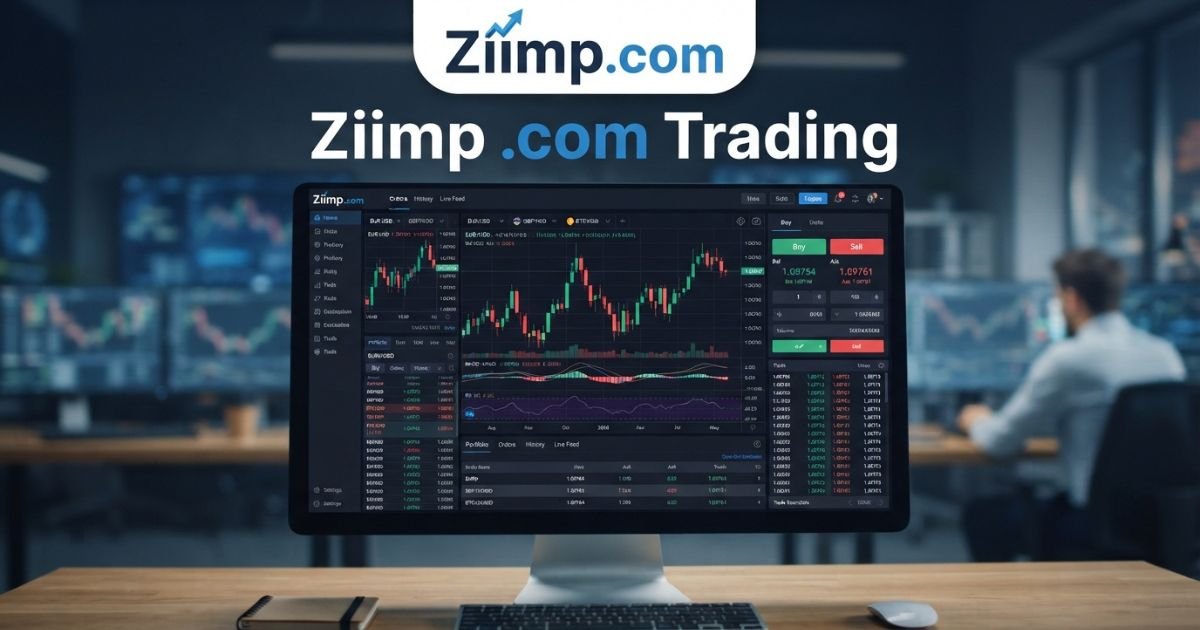

Search for Ziimp .com trading and the results disagree. Some pages describe a full trading platform. Others call it a simple finance blog. So which is it?
This guide separates what can be verified from what is only claimed. You will learn what the term means, how online trading platforms usually work, the risks involved, and how to check any platform before you send money. Everything here is educational and is not financial advice.
What Is Ziimp .com Trading?
Ziimp .com trading is a search phrase linked to the website Ziimp.com. It is used in two different ways:
- As a label for a supposed online trading service.
- As a label for finance and market education content.
Several third-party articles portray it as a digital trading platform with dashboards, automation and multiple assets. However, independent reviews report no verifiable broker registration, no clear ownership details and no evidence of a live account system.
That gap between claims and proof is the most important thing to understand.
Core Concept Behind Ziimp .com Trading
Trading means buying and selling assets such as stocks, currencies, commodities or crypto to profit from price changes. A genuine trading platform connects you to a market, holds your funds under legal rules and executes your orders.
The concept attached to Ziimp .com is convenience: simple access to markets with modern tools. That promise is common across the industry. It only has value when the provider is licensed, transparent and accountable.
Keep these two ideas apart:
- Trading education: articles that explain markets, risk and strategy.
- Trading services: a regulated broker that handles your money and orders.
Education content is useful. A service requires proof.
How Ziimp .com Trading Typically Works
The steps below describe how online brokerage and automated trading platforms usually operate. They also reflect what articles under this label claim. They are not confirmed features of Ziimp.com.
Account Setup and User Access
On a legitimate platform, registration follows a predictable pattern:
- You provide an email, name and country.
- You complete identity verification (KYC) with a government ID and proof of address.
- You accept clear terms, fee schedules and a risk disclosure.
- You get access to a dashboard.
Real brokers must verify identity to meet anti-money-laundering rules. If a platform skips this entirely, treat that as a warning sign, not a convenience.
Related post: Test.com Pricing Enterprise Plans: Complete 2026 Review
Funding and Capital Allocation
After setup, you normally fund the account by bank transfer, card or another approved method. Regulated brokers hold client money in segregated accounts and publish the legal entity that receives it.
Capital allocation means deciding how much goes into each trade or asset. A common beginner guideline is to risk only a small percentage of your account on any single trade.
Before depositing anywhere, confirm:
- The legal company name and address
- Where client funds are held
- The withdrawal process and any fees
Trading Execution Process
Execution is how your order reaches the market. The usual flow is:
- You choose an asset and order type (market, limit or stop).
- The platform routes the order to a market or liquidity provider.
- The trade is filled at a price, sometimes with slippage.
- You see the position and results in your account.
A real platform shows order history, fees and confirmations. If you cannot see these, you cannot verify your trades.
Key Features Commonly Associated With Ziimp .com Trading
Third-party descriptions mention the features below. Treat them as claims until you see them yourself on a verified product.
User-Friendly Dashboard
A good dashboard shows balance, open positions, profit and loss, and order history in one place. Clean design helps beginners, but design is not proof of legitimacy. Scam sites often look polished.
Automated Trading Tools
Automation can include trading bots, copy trading and rule-based alerts. These tools execute predefined instructions. They do not predict markets. Any promise of “set and forget” income is a red flag.
Multiple Asset Categories
Established platforms may offer stocks, ETFs, forex, commodities, options and crypto. More choice means more complexity. Each asset class carries its own risks, costs and rules.
Real-Time Market Data
Live quotes and charts help with timing. Look for the data source, update speed and whether prices are delayed. Real platforms are open about this.
The Appeal of Ziimp .com Trading
People search this term for understandable reasons. The appeal reflects broader trends in retail trading.
Accessibility for Beginners
Modern platforms lower the barrier to entry with small minimum deposits, simple layouts and learning content. Beginners are drawn to anything that promises to make markets feel less intimidating.
Potential for Fast Market Exposure
Opening an account and placing a trade can take minutes on a regulated app. That speed is attractive. It is also why discipline matters, because fast access makes fast mistakes easy.
Technology-Driven Experience
Real-time data, mobile access and automation shape how people expect to trade. Platforms that advertise technology appeal to users who want efficiency. Technology improves the experience. It does not remove market risk.
Understanding the Risks of Ziimp .com Trading
Risk comes from two places: the markets and the platform. With an unverified platform, both apply.
Market Volatility
Prices can move sharply in seconds. Leverage magnifies gains and losses. Regulators routinely warn that a large share of retail leveraged traders lose money, so never assume you are the exception.
No Guaranteed Profits
No platform, strategy or tool can guarantee returns. Phrases like “risk-free,” “guaranteed daily profit” or “100% win rate” are classic fraud language. Walk away from them.
Over-Reliance on Automation
Bots follow rules. When market conditions change, those rules can fail quickly. Common problems include:
- Strategies tested only on past data
- Hidden fees that erode returns
- Technical errors during fast markets
- Lack of oversight by the user
Emotional and Behavioral Risks
Fear, greed and overconfidence drive poor decisions. Chasing losses, overtrading and ignoring stop-losses are the most common behavioral errors. Strong tools cannot fix weak discipline.
Pros and Cons of Ziimp .com Trading
Pros
- Easy-to-read educational content on markets and finance
- No account or deposit needed to read articles, which limits direct financial exposure
- Beginner-friendly topics and simple language
- A clear disclaimer on some reviews that content is informational
Cons
- No verified regulatory license or broker registration
- Limited public information about ownership and the team
- Conflicting third-party descriptions, which create confusion
- No confirmed charts, accounts or trading tools
- Few independent user reviews to confirm real-world experiences
Common Myths About Ziimp .com Trading
Myth 1: It Is a Guaranteed Income Source
False. No platform guarantees income. Markets are uncertain, and even professionals lose trades. Guaranteed returns are a hallmark of scams.
Myth 2: Automation Means Zero Effort
False. Automated tools need setup, testing, monitoring and adjustment. You remain responsible for every decision and every loss.
Myth 3: Beginners Always Win
False. Beginners often lose because they lack risk management and experience. Early luck can create dangerous overconfidence.
Who Should Consider Ziimp .com Trading?
Based on current public information, the safest use of Ziimp .com is as a reading resource, not as a place to deposit money.
It may suit:
- Beginners who want general market explanations
- Readers comparing financial topics before choosing a regulated broker
- Students researching trading concepts
It does not suit:
- Anyone planning to send funds without verifying the provider
- People seeking guaranteed or passive income
- Traders needing regulated protections and compensation schemes
Risk Management Strategies for Ziimp .com Trading
These habits protect you on any platform.
Start with a Small Capital
Use only money you can afford to lose completely. Test any platform with a small amount first, then try a withdrawal early. A smooth withdrawal is a stronger trust signal than a slick dashboard.
Set Clear Limits
Decide in advance:
- Maximum risk per trade (many traders use 1 to 2 percent)
- Daily and weekly loss limits
- Target and exit points
Write the rules down and follow them.
Avoid Emotional Trading
Step away after a big win or loss. Never double a position to recover losses. A trading journal helps you spot emotional patterns.
Keep Learning
Study technical analysis, fundamental analysis and risk-reward ratios. Use demo accounts from regulated brokers to practice. Learning from multiple trusted sources protects you from one-sided claims.
Legal and Regulatory Awareness
Regulation is your safety net. Licensed brokers follow rules on client funds, disclosures and complaint handling.
Use this checklist before trusting any platform:
- Find the legal entity. Look for a company name, registration number and physical address.
- Check the regulator’s register. In the US, use SEC resources, FINRA BrokerCheck and the NFA BASIC database. In the UK, use the FCA register. In Australia, check ASIC.
- Read the terms. Look for fee tables, withdrawal rules and a risk warning.
- Search for complaints. Look beyond the platform’s own testimonials.
- Test support. Ask a specific question and judge the answer.
- Check for pressure tactics. Urgent deadlines and “limited spots” are warnings.
If a platform cannot pass step one or two, do not deposit. Some sites state plainly that they are not a broker or adviser. That honesty is fine, but it means they cannot execute trades for you.
Laws differ by country, so check your local rules or speak with a licensed professional.
Ziimp .com Trading vs Traditional Investing
Trading
- Short to medium time horizon
- Aims to profit from price swings
- Higher activity, higher costs and more stress
- Higher risk of losses, especially with leverage
Traditional Investing
- Long time horizon, often years or decades
- Focuses on business growth, dividends and compounding
- Lower activity and typically lower costs
- Often uses diversified funds such as index ETFs
Trading is a skill that takes time to develop. Investing is a patient process. Many people combine both, keeping long-term savings separate from a small speculative budget.
Psychological Aspects of Online Trading
Emotional Discipline
Markets test emotions daily. A plan, written rules and position sizing reduce impulse decisions. Discipline matters more than any dashboard.
Patience and Realism
Skilled trading builds slowly. Expecting fast riches leads to risky behavior. Set realistic goals and judge results over months, not days.
Accountability
Keep records of every trade and the reason behind it. Review your mistakes honestly. If you trade with a friend or mentor, share your rules so someone can challenge you.
How to Approach Ziimp .com Trading Responsibly
Follow this simple path:
- Treat it as education first. Use the content to learn, then verify claims elsewhere.
- Verify before you fund. Confirm the legal entity and regulator.
- Never share sensitive data lightly. Avoid sending ID, card or wallet details to unverified sites.
- Start small and test withdrawals.
- Use regulated brokers for real trades. Compare fees, protections and tools.
- Seek professional advice for large or complex decisions.
Future Outlook of Platforms Like Ziimp .com Trading
Online trading will keep growing, shaped by AI tools, mobile access and fractional investing. Regulators are also tightening rules on advertising, crypto and unlicensed offers.
Two trends matter for readers:
- More automation and AI-driven analysis, which will raise both opportunity and the need for oversight.
- More search-driven content and impersonation risk, where websites and articles describe services that may not exist.
The winners will be platforms that are transparent, regulated and honest about risk. Users who verify before they trust will be better protected.
Conclusion
Ziimp .com trading is a term surrounded by mixed claims. Independent signals suggest it is best viewed as an informational website, not a confirmed broker. Features like dashboards and automation are described by third parties but are not verified.
If you are curious, use it as a learning resource and nothing more. For real trading, choose a regulated broker, check registrations yourself, start small and manage your risk. Reliable markets reward patience, evidence and discipline.
Frequently Asked Questions
Is Ziimp .com a real trading platform?
No clear public evidence shows it is a registered broker or working trading platform. Most reviews describe it as an informational site.
Is Ziimp .com trading safe?
Reading content is low risk, but depositing money is not advisable without verified licensing and ownership details.
Is Ziimp .com regulated?
No verifiable regulation by a major financial authority has been confirmed. Always check official regulator registers yourself.
Can beginners use Ziimp .com trading?
Beginners can use the educational content to learn basics. They should place real trades only through a regulated broker.
Does Ziimp .com guarantee profits?
No. No legitimate platform can guarantee profits, and any guarantee is a major red flag.
How can I verify a trading platform?
Check its legal entity, confirm its license on a regulator’s official database, read the fee terms and test a small withdrawal.

